E-Marking and UN ECE R10: EMC Rules for Aftermarket Electronics
By Ian D. Reviewed byJames M.
An E mark under ECE R10 shows that a vehicle or an electronic part fitted to it has been approved for electromagnetic compatibility (EMC) under UN Regulation No 10. R10 limits the interference electronics give off and checks they keep working when the vehicle’s electrical environment gets noisy.
Key facts:
- R10 covers EMC for vehicles of categories L, M, N, O, T, R and S, plus components and separate technical units fitted to them.
- Two halves: immunity of safety and control functions to disturbance, and limits on unwanted emissions, including from retrofitted accessories.
- Current text: the EU’s Official Journal published a consolidated R10 on 22 November 2022, incorporating Supplement 1 to the 06 series of amendments.
- Aftermarket parts need type approval if they relate to immunity-related functions; others can rely on a manufacturer’s declaration.
- The E-mark is a capital E in a circle with the approving country’s number, for example E11 for the United Kingdom.
What is UN ECE R10?
R10 is the UN regulation for electromagnetic compatibility in road vehicles. EMC is about two things at once: a device must not pollute the radio spectrum around it, and it must keep working when other equipment does.
A vehicle is a hard place for electronics. Ignition systems, motors, alternators and now high-voltage drivetrains all create electrical noise, and the vehicle relies on electronic control for its engine, brakes and lights.
R10 covers (UN Regulation No 10, OJ L 302):
- Immunity to radiated and conducted disturbances for functions such as direct control of the vehicle, occupant protection and vehicle data bus functionality.
- Emissions, controlling unwanted radiated and conducted disturbance, including from accessories that may be retrofitted to the vehicle.
In the EU, the General Safety Regulation lists UN R10 as the EMC requirement for vehicle type approval (Regulation (EU) 2019/2144).
What is an ESA under R10?
R10 calls an electronic part an electrical/electronic sub-assembly, or ESA. That’s an electrical or electronic device, with its wiring and connections, that’s intended to be part of a vehicle and performs one or more specialised functions.
An alarm control unit is an ESA. So is a tracker, a CAN interface or an immobiliser. A manufacturer can have an ESA approved as a component or as a separate technical unit, and the approved product then carries an E-mark.
Does aftermarket electronics need R10 approval?
It depends on what the device can affect. R10 draws the line at immunity-related functions.
- Spare parts identical to an OE part from the same manufacturer, and marked as a spare part, need no separate approval.
- Aftermarket components not related to immunity-related functions need no type approval. The manufacturer instead issues a declaration that the ESA meets the regulation’s limits.
- Anything touching immunity-related functions needs type approval.
The regulation’s list of immunity-related functions is wide, and it says the list is not exhaustive. It includes:
- Direct control of the vehicle: engine, gears, brakes, suspension, steering and speed limitation devices.
- Occupant protection: airbags, restraints and emergency calling.
- Disturbances that confuse road users: direction indicators, stop lamps, warning displays, and acoustic devices such as the horn and the anti-theft alarm.
- Vehicle data bus functionality: anything that could block data on the bus used by other immunity-related functions.
Read against that list, most vehicle security and CAN-connected products sit inside it. An immobiliser interacts with engine operation, an alarm drives an acoustic warning and many interfaces connect to the data bus. If you’re specifying a product, ask the supplier for its R10 approval number rather than a declaration.
How do you read an E-mark?
The UN marks used under the 1958 Agreement follow one pattern. The R116 alarm regulation spells it out (R116, OJ L 45):
| Element | What it tells you |
|---|---|
| Capital “E” in a circle | A UN regulation approval |
| Number after the E | The approving country: 1 Germany, 4 Netherlands, 11 United Kingdom, 20 Poland, 24 Ireland |
| Regulation number and “R” | Which regulation the part is approved to, for example 10R |
| Approval number | The specific approval, traceable to the authority’s file |
So an E11 mark means the approval was granted in the UK. In Britain that’s the job of the Vehicle Certification Agency; our guide to VCA approval explains its role.
How does R10 relate to the EMC Directive?
General electronics sold in Europe usually meet the EMC Directive 2014/30/EU and carry a CE mark. Vehicle parts are different.
The Directive says that where its essential requirements are laid down more specifically by other EU legislation, it doesn’t apply to that equipment (Directive 2014/30/EU). For vehicles and their ESAs, the type-approval framework and R10 are that more specific legislation.
The practical point for installers: a CE mark on its own isn’t the evidence a vehicle maker, fleet engineer or approval authority will look for on an in-vehicle product. The E-mark is.
Why EMC matters when you fit kit
Poor EMC shows up in the workshop as odd faults. A cheap device can put noise on the supply, interfere with key-fob reception or disturb a data bus. Splicing into the factory loom adds risk of its own, which is why plug-in harnesses help; see fitting accessories without cutting the loom.
Scorpion designs and builds its electronics in-house in Chorley, from firmware to production, with automated conformal coating and optical inspection on the line. That control over design and build is part of why Scorpion suits vehicle makers who need documentation as well as hardware. Our OEM and bespoke team supports homologation for vehicle programmes.
Ask our engineers about approvals paperwork
Need to know what a product is approved to before it goes on your vehicles? Ask our engineers.
- Speak to us about approvals and documentation
- OEM and bespoke for vehicle maker and importer programmes
Frequently Asked Questions
What does ECE R10 cover?
UN ECE Regulation No 10 covers electromagnetic compatibility for road vehicles and the electronic sub-assemblies fitted to them. It sets limits on unwanted emissions and requires immunity to disturbance for functions such as vehicle control, occupant protection and data bus operation.
What does E11 mean on a car part?
E11 means the part was approved under a UN regulation by the United Kingdom’s approval authority. The capital E in a circle shows a UN approval, and the number identifies the approving country, such as 1 for Germany or 4 for the Netherlands.
Does every aftermarket device need an E-mark?
Not every one. Under R10, aftermarket parts not related to immunity-related functions can rely on a manufacturer’s declaration. Devices that affect functions such as engine control, warning devices, alarms or the data bus need type approval and carry an E-mark.
Is a CE mark enough for vehicle electronics?
Usually not. The EMC Directive steps aside where more specific EU legislation sets the requirements, and for vehicle parts that’s type approval and UN R10. An E-mark is the evidence vehicle makers and authorities expect on in-vehicle electronics.
Which version of R10 is current?
The consolidated text published in the EU’s Official Journal on 22 November 2022 incorporates Supplement 1 to the 06 series of amendments. Check the UNECE status document for later supplements before relying on a specific version for an approval.
Speak to our team
Dealers, installers and OEM partners get trade pricing, product training and a named account manager. Tell us what you need.
Related Products
View all products →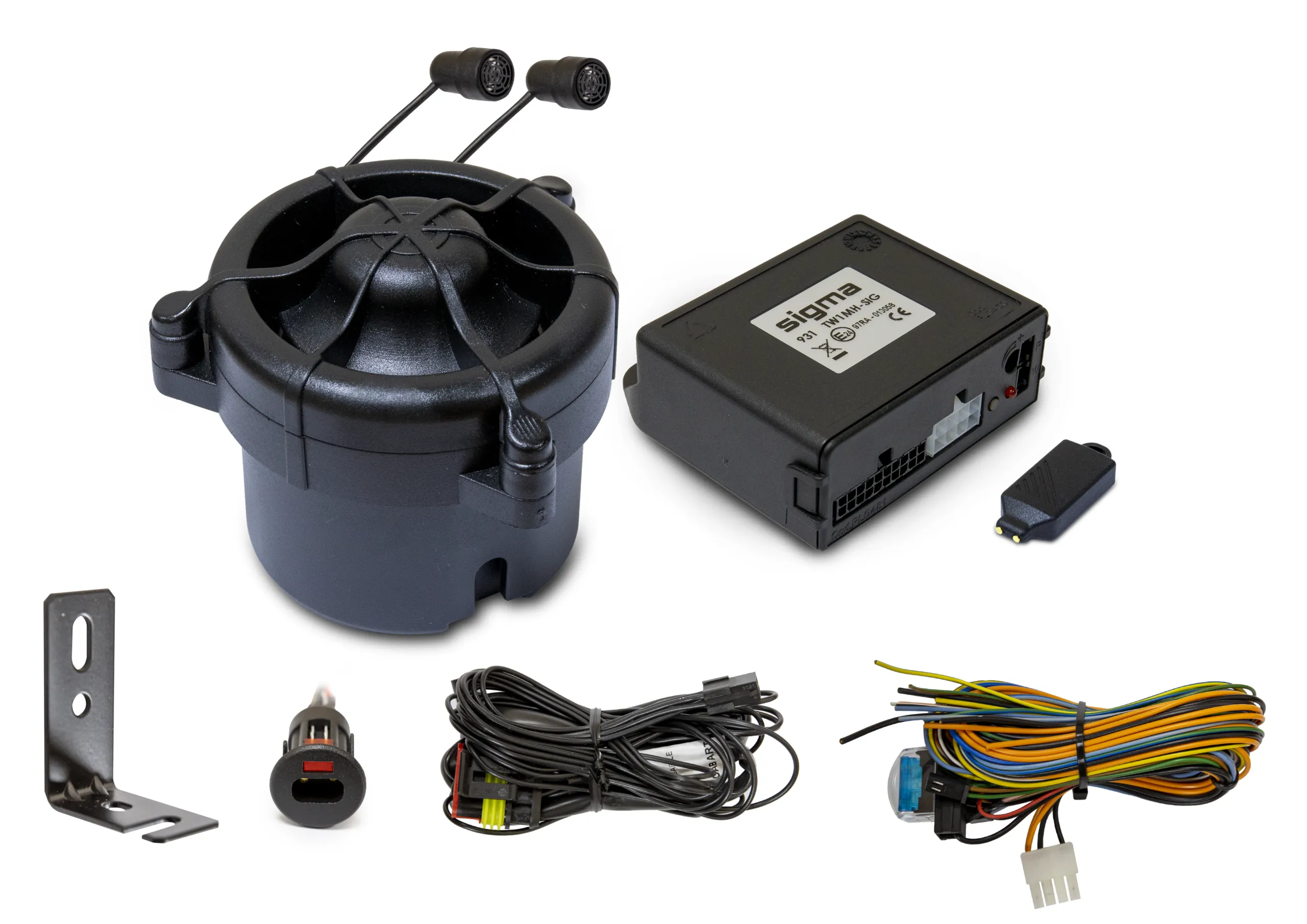


- standards
- EMC
- type approval
- aftermarket electronics

Ian D.
Head of R&D at Scorpion Automotive
Ian D. is Head of R&D at Scorpion Automotive in Chorley and writes about Thatcham, insurance and OEM engineering.
Reviewed by James M., Technical Director at Scorpion Automotive


