Exporting Vehicle Electronics: CE, UKCA and E-Marking Explained
By Morgan P. Reviewed byJames M.
For automotive electronics, the UKCA and CE marks cover general product rules, while the E mark shows UN type approval for parts fitted to vehicles. If you export or import in-vehicle kit, the E-mark is usually the evidence that matters, with UKCA or CE applying to products outside the vehicle approval system.
Key facts:
- CE is the EU conformity marking for products under EU product rules such as the EMC Directive.
- UKCA is the Great Britain equivalent, and GB continues to recognise CE for many product regimes, alongside or in place of UKCA.
- The E-mark shows approval to a UN vehicle regulation, such as R10 for electromagnetic compatibility or R116 for alarms and immobilisers.
- The EMC Directive steps aside where more specific EU legislation sets the requirements, which is how vehicle EMC is handled.
- In the UK, the Vehicle Certification Agency is the designated type approval authority for automotive products.
What is the difference between CE, UKCA and the E-mark?
They come from different legal systems, so they answer different questions.
- CE marking is the manufacturer’s declaration that a product meets the EU rules that apply to it. Many CE regimes rely on self-declaration against harmonised standards.
- UKCA marking does the same job for Great Britain under UK product regulations.
- An E-mark is issued under a UN vehicle regulation after testing and approval by a national authority. It’s a capital E in a circle with the approving country’s number, followed by the regulation and approval numbers.
The first two are general product markings. The E-mark is part of vehicle type approval, the system that governs what can be fitted to cars, vans and trucks. Our guide to E-marking and UN ECE R10 explains how to read one.
Which marking applies to in-vehicle electronics?
For a device that’s installed in a vehicle, the starting point is vehicle type approval, not the general product rules.
The EU’s EMC Directive says it doesn’t apply where its essential requirements are laid down more specifically by other EU legislation (Directive 2014/30/EU). For vehicles and their electronic sub-assemblies, that more specific legislation is type approval, which uses UN Regulation No 10 for EMC.
R10 sets the detail (UN Regulation No 10):
- Aftermarket parts not related to immunity-related functions need no type approval; the manufacturer issues a declaration that they meet the regulation.
- Parts related to immunity-related functions, a list that includes engine control, warning devices such as the anti-theft alarm, and the vehicle data bus, need type approval.
Alarms and immobilisers have their own regulation too. Our guide to UN ECE R116 covers what an approved alarm and immobiliser must do.
Products used with a vehicle but not fitted to it, such as a handheld charger or a workshop tool, fall back under general product rules, and that’s where CE and UKCA come in.
What changed for Great Britain and Northern Ireland?
After the UK left the EU, Great Britain created UKCA, and the government later chose to keep recognising CE for many regimes.
The current GOV.UK guidance says the UK continues to recognise CE marking, alongside or in place of UKCA, for the Great Britain market under The Product Safety and Metrology (Amendment) Regulations 2024 (GOV.UK). For electromagnetic compatibility, the government’s sector table lists UKCA or CE for Great Britain and CE, or CE with UKNI, for Northern Ireland (GOV.UK sector table).
Vehicle approvals sit in a separate system. The Vehicle Certification Agency describes itself as the designated UK Type Approval Authority for automotive products, and a designated Technical Service for testing in the UN scheme (VCA). For more on its role, see VCA approval explained.
How do the markings compare?
| CE | UKCA | E-mark (UN) | |
|---|---|---|---|
| Legal basis | EU product legislation | GB product regulations | UN vehicle regulations under the 1958 Agreement |
| Typical route | Manufacturer’s declaration, sometimes third-party assessment | Manufacturer’s declaration, sometimes third-party assessment | Testing and approval by a national authority |
| Used for | General products sold in the EU | General products sold in Great Britain | Vehicles and the parts fitted to them |
| What a buyer should ask for | Declaration of conformity | Declaration of conformity | Approval number and certificate |
What should you check before exporting vehicle electronics?
Work through these before the first shipment, not after a customer asks:
- Classify the product. Is it fitted to a vehicle, or used with one? That decides whether type approval or general product rules apply.
- Check the immunity question. Under R10, anything touching vehicle control, warning devices or the data bus needs approval.
- Collect the evidence. Approval certificates, declarations of conformity and the installation instructions in the market’s language.
- Confirm the market’s own schemes. Insurer approvals such as Thatcham in the UK are separate from type approval and vary by country.
- Plan for fitting. Approved parts still need correct installation; keep the installation records the regulation or insurer expects.
How Scorpion supports export and homologation
Scorpion designs and manufactures vehicle electronics in the UK and sells into overseas markets, with offices in Varese, Italy and Ontario, Canada as well as Chorley. The company won the BIBAs Exporter of the Year award in 2017.
Because R&D, firmware and production happen in-house, our engineers can supply the documentation a vehicle maker or importer needs alongside the hardware; that’s a big part of why Scorpion works with vehicle makers. Our OEM and bespoke team supports homologation for programmes, and can tell you what each product is approved to before you commit.
Talk to us about paperwork for a new market
Importing vehicles, or taking our products into a new market? Talk to us about the paperwork as well as the products.
- Speak to us about approvals for your market
- OEM and bespoke for vehicle maker and importer programmes
Frequently Asked Questions
Do vehicle electronics need a UKCA mark?
Electronics fitted to a vehicle are normally handled through vehicle type approval and UN regulations such as R10, shown by an E-mark, rather than UKCA. Products used with a vehicle but not fitted to it fall under general product rules, where UKCA or CE applies in Great Britain.
Is CE marking still accepted in Great Britain?
Yes, for many product regimes. GOV.UK guidance says the UK continues to recognise CE marking, alongside or in place of UKCA, for the Great Britain market under The Product Safety and Metrology (Amendment) Regulations 2024. Check the sector table for your product type.
What is the difference between a CE mark and an E-mark?
A CE mark is an EU product conformity marking, often based on the manufacturer’s own declaration. An E-mark is issued under a UN vehicle regulation after approval by a national authority, and it identifies the approving country, the regulation and the approval number.
Who issues E-marks in the UK?
The Vehicle Certification Agency is the designated UK Type Approval Authority for automotive products and a Technical Service in the UN scheme. Approvals granted by the United Kingdom carry the number 11 in the E-mark circle.
What marking applies in Northern Ireland?
For electromagnetic compatibility, the government’s sector table lists CE, or CE with UKNI, for Northern Ireland, while Great Britain accepts UKCA or CE. Vehicle parts fitted under type approval follow the vehicle approval rules instead.
Speak to our team
Dealers, installers and OEM partners get trade pricing, product training and a named account manager. Tell us what you need.
Related Products
View all products →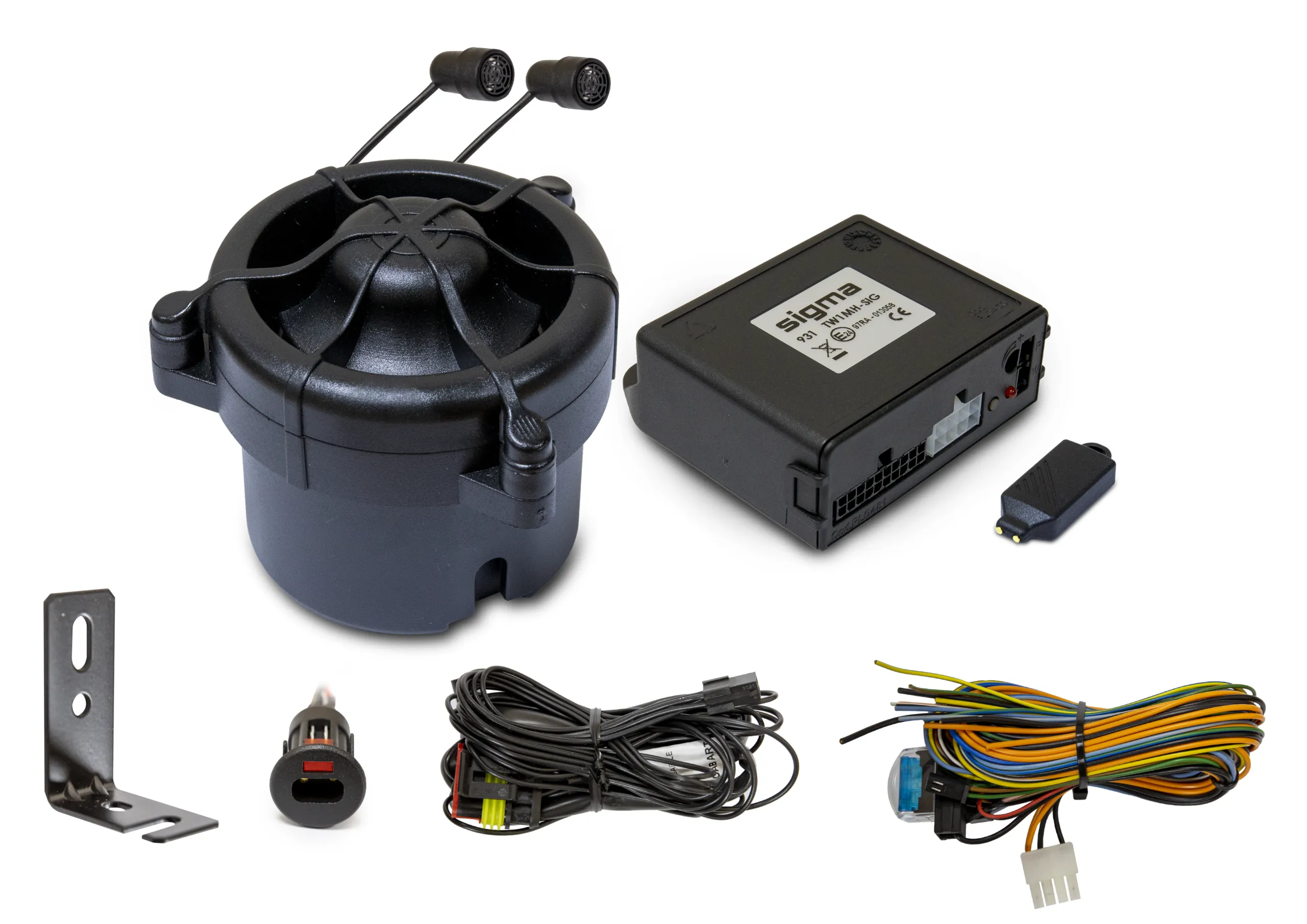


- export
- type approval
- UKCA
- standards

Morgan P.
Head of Tracking Support at Scorpion Automotive
As Head of Tracking Support at Scorpion Automotive in Chorley, Morgan P. writes about Scorpion VHF+, stolen vehicle tracking, theft data and international markets.
Reviewed by James M., Technical Director at Scorpion Automotive


