
CAN bus speed pulse interface
Take a clean, reliable road-speed signal off the vehicle network, with no need to splice into the factory speedometer wiring.
What a CAN bus speed pulse interface does
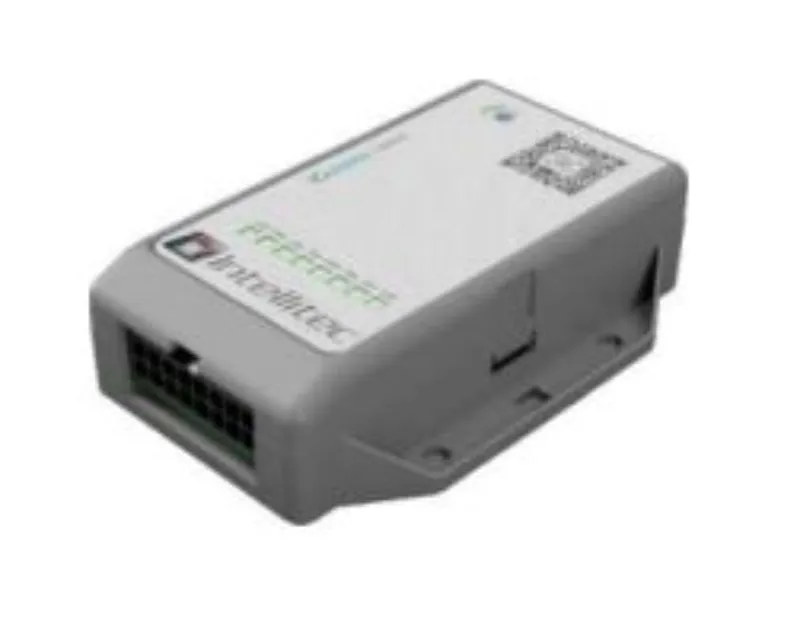
A CAN bus speed pulse interface reads road-speed messages on a vehicle's CAN network and converts them into a physical speed-pulse output. That output is the frequency signal older accessories expect, where the pulse rate rises and falls with the vehicle's speed.
It lets you feed speed to telematics units, tachographs, speed limiters, cameras and other speed-dependent equipment on a modern vehicle that no longer runs a traditional speedometer wire. The connection is to the network, so the factory loom stays intact.
Why you need one on a modern vehicle
Most vehicles built in the last two decades carry road speed as a digital message on the CAN bus, not as a switched wire you can tap. If your accessory needs a speed feed, you need something to translate the network message into a signal it understands.
- No speedometer wire to tap: modern ECUs broadcast speed digitally, so there is nothing to splice into.
- A signal accessories accept: the interface outputs a proportional pulse, the format trackers, tachographs and limiters are built around.
- Clean and reversible: it connects to the network rather than cutting the loom, so the vehicle can be handed back to standard.
- Consistent across the fleet: one approach works over a mixed fleet of makes and models.
What a speed feed drives
A single clean speed signal is the input a lot of vehicle equipment depends on.
Telematics and trackers
Accurate speed and distance for journey logging, driver behaviour and fleet reporting.
Tachographs
A compliant speed input for digital tachograph systems on commercial vehicles.
Speed limiters
The true road-speed reference a limiter governs to, including retrofit and mandate work.
Reversing and AI cameras
Speed-aware camera systems that change behaviour above or below a threshold.
PTO and auxiliary control
Equipment that must only run below a set speed, interlocked to the real road speed.
Driver aids and displays
Add-on displays and warning systems that need a live speed value.







Need a clean speed signal off the CAN bus?
Tell us the vehicle and what the feed drives, and our engineers will confirm the right interface for the job.
Reference
How the interface produces a speed signal
The process is the same in principle on any CAN-equipped vehicle, though the message identifiers differ by manufacturer.
- 1
Connect to the network
The interface joins the vehicle's CAN bus at a convenient point, reading the traffic already on the wire. It does not cut into the speedometer or gearbox wiring.
- 2
Read the speed message
It identifies the road-speed message for that make and model and decodes the current speed from it.
- 3
Output a proportional pulse
It generates a speed-pulse output whose frequency tracks the vehicle's speed, ready for the accessory to read.
- 4
Feed the accessory
The tracker, tachograph, limiter or camera receives the pulse and uses it exactly as it would a factory speed feed.
Which vehicles it covers
The principle is universal: cars, vans, trucks, buses and specialist vehicles all carry road speed on the CAN bus. What changes is the message format, which is a matter of configuration, not different hardware.
Coverage spans the common UK fleet, kept current with in-house firmware. We've built vehicle electronics in the UK since 1973.
The alternative, chasing a speed wire through the loom or fitting a gearbox sender, is slow and risky on a vehicle full of digital electronics. Reading the network is cleaner and protects the warranty.
Feed it a true speed signal and each accessory does its job: the tracker reports accurate journeys, the tachograph records correctly, and the limiter governs to the real road speed.
Common fitments include:
Common questions
What is a CAN bus speed pulse?
It is a physical output signal whose frequency rises and falls with the vehicle's road speed, generated by reading the speed message on the CAN bus. Accessories that once used a speedometer wire read it the same way.
Why can't I just tap the speedometer wire?
On most modern vehicles there is no analogue speedometer wire to tap. Road speed travels as a digital message on the network, so you need an interface to convert it into a usable pulse.
Will it work with my tracker or tachograph?
Yes. The interface produces the proportional speed signal that telematics units, tachographs and limiters are designed to accept.
Does fitting it affect the vehicle warranty?
The interface reads the network rather than cutting into the factory loom, so the installation is clean and reversible. Follow the vehicle manufacturer's guidance for any accessory fitment.
Can you supply a speed interface for an unusual vehicle?
Yes. We design and manufacture CAN electronics in the UK and can develop for a specific vehicle or signal. Speak to us with the make, model and what the feed is for.