What Is a Relay Attack? How Keyless Car Theft Works
By Mike B. Reviewed byJames M.
A relay attack is a car theft method where thieves use radio devices to extend a keyless fob signal from inside your home to the car on your drive. The car believes the key is beside it, so it opens and starts. Nothing is broken and no key is taken, so relay theft is quick and quiet.
Key facts:
- Target: cars with passive keyless entry and push-button start.
- Method: one device near the house picks up the fob, a second near the car repeats it.
- Scale: in the 2022 to 2023 Crime Survey for England and Wales, the offender manipulated a signal from a remote locking device in 40% of thefts of vehicles (ONS).
- Why it works: the factory immobiliser trusts the key’s signal, so a relayed signal passes its check.
- What stops it: something the relay can’t copy, such as a PIN or tag needed before the car will drive.
How does keyless entry normally work?
Keyless entry is built for convenience. Walk up to the car with the fob in your pocket and the doors open when you touch the handle. Press the start button and the engine runs.
Behind that, the car and the fob are talking. The car sends out a short-range wake-up signal from antennas around the doors and cabin. A fob that hears it replies with a coded radio message. If the code is right, the car accepts that its key is nearby.
The weakness is in the word nearby. The car checks that the code is genuine. On many keyless systems it doesn’t check how far away the fob really is.
How does a relay attack work?
A relay attack exploits that gap. It usually takes two people and two devices.
- Thief one stands near the house. Keys are often left in a hall or near a front door. Their device picks up the fob’s signal through the wall or window.
- Thief two stands by the car. Their device receives the relayed signal and repeats it next to the door.
- The car is fooled. It hears a genuine fob reply and opens.
- The car starts. Inside, the start button works the same way, so the engine runs.
- The car is driven away. Once moving, most cars will keep running until switched off, even without the key.
The thieves never touch the key. The owner often doesn’t find out until the morning.
Why doesn’t the factory immobiliser stop it?
Every new car sold in the UK since 1998 has a factory immobiliser. It’s there to stop the engine running without the key. In a relay attack, as far as the car can tell, the key is present. The immobiliser receives a valid code and does exactly what it was built to do: it lets the engine run.
That’s the important point. Relay theft doesn’t break the factory security. It satisfies it. Any extra protection has to ask for something the fob can’t provide. Our guide to vehicle immobilisers explained covers the different types and how each responds.
How common is keyless theft?
The Office for National Statistics publishes detail from the Crime Survey for England and Wales on how vehicle thefts happen. In the 2022 to 2023 survey year, an offender had manipulated a signal from a remote locking device in 40% of thefts of vehicles (ONS). That covers relay attacks along with other signal tricks, but it shows how far electronic methods have overtaken forced entry.
How do you stop a relay attack?
Some steps cut the risk. Others remove it.
Steps that reduce the risk
- Keep the fob away from doors and windows so it’s harder to pick up.
- Use a signal-blocking pouch or box at home. Test it: stand by the car with the fob inside and check the doors stay locked.
- Check whether your car lets you switch off keyless entry or put the fob to sleep. Some manufacturers offer this in the settings or the handbook.
- Use a visible steering lock as a deterrent.
These help, but each relies on you remembering every time, with every key.
Steps that block the drive-away
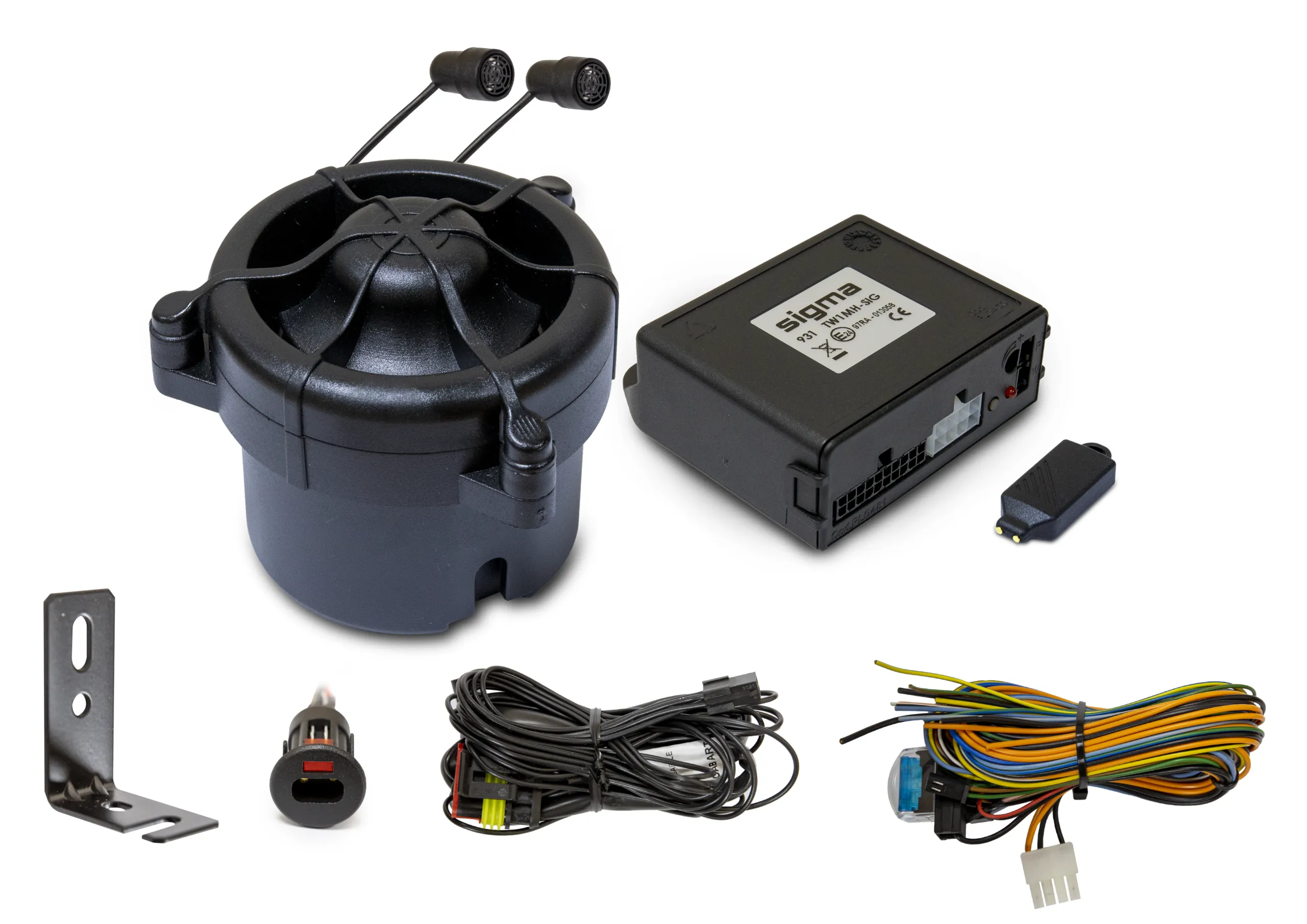
The stronger answer is a second barrier that doesn’t trust the fob at all. A CAN bus immobiliser connects to the car’s own network and arms itself the moment the ignition goes off. To drive, the car needs a custom PIN entered on its existing buttons, or a separate driver tag.
The X-Series immobiliser works this way. A relay attack can still get a thief into the car, but without the PIN or tag, the car won’t drive away. There’s no keypad to find and no box to rip out. Our page on how a CAN bus immobiliser works explains the mechanics.
Adding recovery
Prevention and recovery are different jobs. Pairing an immobiliser with a monitored tracker covers both: the immobiliser stops the drive-away, the tracker raises the alarm and helps locate the car if the worst happens. Scorpion Defender combines a ScorpionTrack tracker with an alarm or immobiliser in one package.
Which cars are at risk?
Any car with passive keyless entry and start can be targeted. High-value and high-demand models are the obvious ones: premium SUVs, 4x4s and popular vans. But the technique isn’t limited to expensive vehicles, and keyless systems are now common on mainstream cars.
If you’re unsure whether your car has passive keyless entry, check the handbook. A car that opens when you touch the handle with the fob in your pocket has it. Our keyless and relay theft page lists models we’re often asked to protect.
Recovering a relayed car
A relayed car is often moved fast and hidden where GPS and mobile signals struggle, such as a container or an underground car park. The Scorpion VHF+ Recovery Network is being built for that gap, with a VHF layer under GPS/4G tracking and a beacon that works alongside any tracker, not only ScorpionTrack. See how VHF and GPS tracking compare.
Relay is one of six common methods. The method-by-protection matrix shows what answers each.
Talk to us about relay theft protection
Worried about relay theft on your car or van? Tell us the vehicle and we’ll confirm the right immobiliser, on its own or with tracking.
- Speak to us about protecting a keyless vehicle
- X-Series immobiliser for PIN and tag protection
Frequently Asked Questions
What is a relay attack on a car?
It is a keyless theft method where thieves use two radio devices to extend the signal of a keyless fob from inside your home to the car. The car thinks the key is present, opens and starts.
Can a relay attack happen if my keys are inside the house?
Yes, that is how it usually works. The device near the house picks up the fob through a door, wall or window. Keeping keys away from the front of the house and in a tested signal-blocking pouch reduces the risk.
Does a Faraday pouch stop relay theft?
A working signal-blocking pouch stops the fob being picked up while it is inside. Pouches can wear out, so test yours regularly, and remember it only protects the key that is in it.
Will an aftermarket immobiliser stop a relay attack?
An immobiliser that needs something the fob can’t provide, such as a PIN or a driver tag, stops the car being driven away even if the thieves open it with a relayed signal.
Can thieves relay a fob that is switched off?
If the fob is asleep or keyless entry is disabled, it doesn’t answer the car’s wake-up signal, so there is nothing to relay. Check your handbook to see whether your car offers this.
Speak to our team
Questions about vehicle security, tracking or fleet telematics? Our UK team will point you to the right product for your vehicle or fleet.
Related Products
View all products →

- keyless theft
- relay attack
- X-Series
- immobilisers
- VHF+

Mike B.
Software Engineer at Scorpion Automotive
Mike B. is a Software Engineer at Scorpion Automotive in Chorley. Vehicle security, immobilisers and keyless theft are the areas Mike covers.
Reviewed by James M., Technical Director at Scorpion Automotive


