CAN Bus Alarm Installation: An Installer's Overview
By Sam P. Reviewed byJames M.
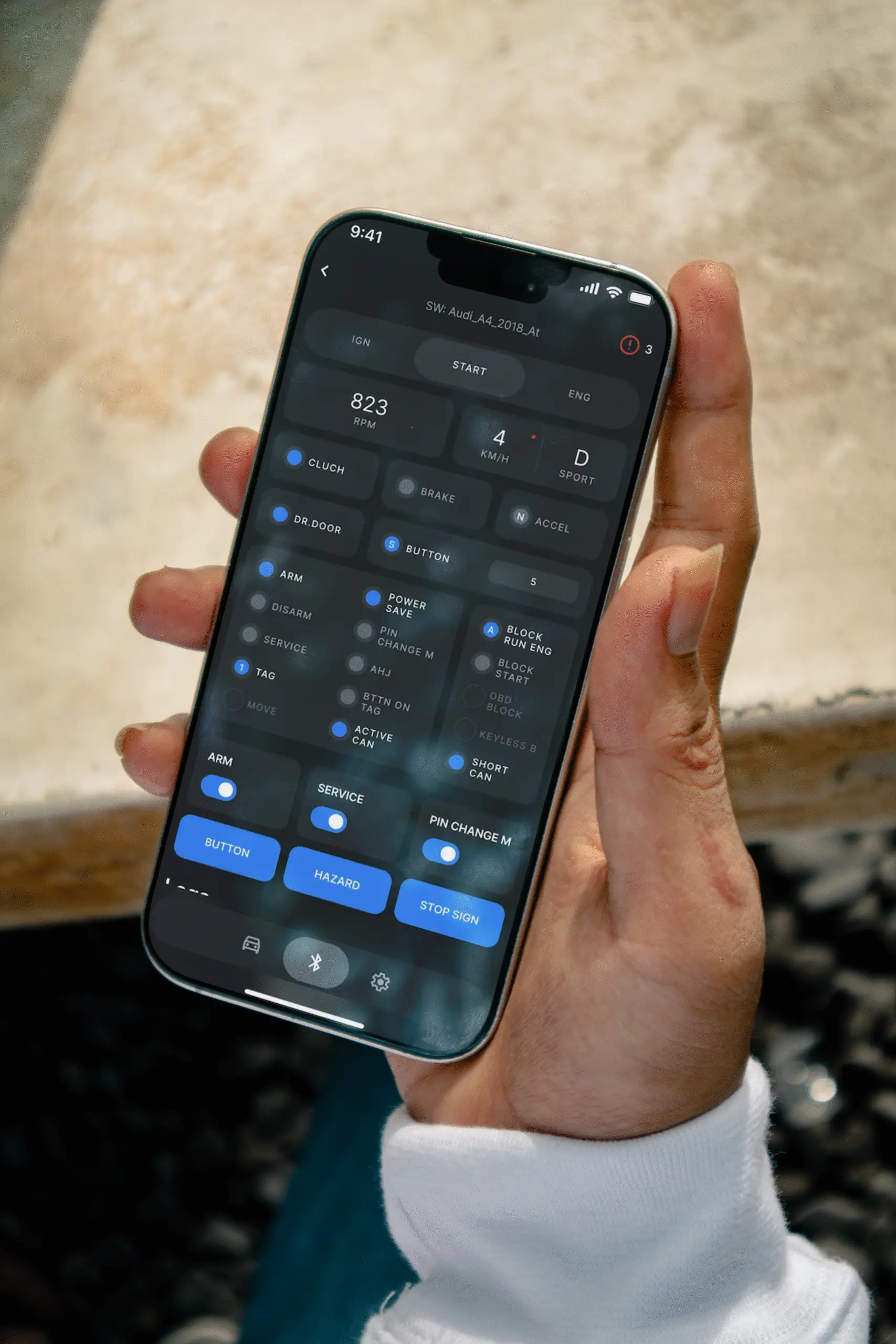
CAN bus alarm installation means connecting the alarm to the vehicle’s own data network, so it reads doors, locks and ignition as messages rather than through separate wires. The job runs in a set order: pre-fit checks, the CAN connection, power and earth, sensors and siren, then testing and a proper handover.
The job in order:
- Check first: vehicle, model year, product compatibility and battery health.
- Connect to CAN at the point the fitting guide gives for that vehicle.
- Power and earth from sound, fused points.
- Mount sensors, siren and LED where they work and can’t be reached easily.
- Test everything, then hand over with paperwork.
How is a CAN bus alarm different from a conventional alarm?
A conventional alarm needs a wire for each signal it watches: door pins, central locking, indicators, ignition. On older cars that was manageable. On a modern vehicle many of those signals no longer exist as simple switched wires. They travel as messages on the CAN network between control units.
A CAN bus alarm reads those messages. It knows when a door opens, when the car locks with the original remote and when the ignition comes on, from a small number of connections. Plip upgrade alarms use exactly this: the owner keeps the original key, and the alarm arms and disarms as the vehicle’s own locks do. If you’re new to the network itself, start with what is CAN bus.
The benefits for you are fewer joints, a faster fit and less risk to the factory loom.
What should you check before you start?
Ten minutes of checks saves hours later.
- Confirm the exact vehicle. Model, model year and build often decide which software and wiring the alarm needs.
- Read the fitting guide for that vehicle before any trim comes off.
- Check the battery. A weak battery causes odd CAN behaviour and false faults.
- Scan for existing fault codes so you don’t inherit someone else’s problem.
- Check how the customer uses the car: keyless entry, a second key, a dog left inside. It changes how you set up the sensors.
Note the condition of the vehicle and anything already wrong with it. Write it down.
Where do you connect to the CAN network?
Use the connection point in the manufacturer’s fitting guide for that vehicle, not the nearest pair of twisted wires. Vehicles often run several CAN networks at different speeds, and the alarm needs the one that carries body messages.
Good practice:
- Identify CAN high and CAN low with care. Swapping them stops the alarm reading the bus.
- Make secure, insulated joints, or use a non-invasive connection where the product supports one.
- Keep the joint short and avoid adding long stubs to the bus.
- Never cut the bus to insert anything in series.
Our guides on fitting accessories without cutting the loom and CAN wiring cover the techniques in more depth.
How should you place sensors, siren and LED?
Placement decides whether the alarm protects the car or annoys the owner.
| Part | Good placement | Avoid |
|---|---|---|
| Control module | Hidden behind trim, secured, away from water | Places a thief can reach in seconds |
| Siren | Engine bay, protected from heat and spray, hard to reach from below | Behind the grille where it’s easy to cut |
| Ultrasonic sensors | High in the cabin, aimed into the space they cover | Behind trim that blocks the signal |
| Status LED | Visible from outside the car | Hidden where it deters nobody |
Route every cable away from moving parts and sharp edges. Secure it as the vehicle maker would.
How do you test a CAN bus alarm installation?
Test every function the customer will rely on, in the order they’ll use it:
- Arm and disarm with the original remote (or the supplied remote) several times.
- Open each door, the bonnet and the boot while armed. Every one should trigger.
- Trigger the interior sensor and check it doesn’t false alarm with the car settled.
- Check the immobiliser, where fitted, stops the engine starting while armed.
- Re-scan for fault codes and clear anything your work caused.
- Let the vehicle sleep and confirm it does, so the battery won’t drain.
If something doesn’t behave, work through it methodically. Our guide to CAN bus fault finding covers the common causes.
What should the handover include?
Show the customer how to arm, disarm and use any override. Hand over the remotes, codes and paperwork.
For Thatcham-category systems, the installation and its certificate are part of what the customer’s insurer relies on, so complete them fully and accurately. Keep your own record of the vehicle, the product serial number and the tests you carried out.
How Scorpion supports CAN bus installers
The S-Series alarms include Thatcham Category 2-1 upgrades. The S32 works with the vehicle’s original remotes, and the S37 is a CAN bus upgrade with a built-in receiver for wireless PIR sensors in habitation areas and lockers. Our CAN bus interfaces cover the signals installers need for other accessories.
Scorpion’s approved installer programme gives you product and fitment training, full fitting documentation, genuine parts direct and a UK technical desk.
Talk to us about CAN bus alarm fitting
Fitting CAN bus alarms already, or want to start?
- Become an approved installer for training and accreditation
- Speak to us about a specific vehicle or product
Frequently Asked Questions
What is a CAN bus alarm?
A CAN bus alarm reads the vehicle’s data network to monitor doors, locks and ignition, rather than relying on a separate wire for each signal. It needs fewer connections, and plip upgrade versions work with the car’s original remote.
Do I need special tools to fit a CAN bus alarm?
You need a good multimeter, quality connectors, trim tools and a way to read and clear fault codes. Some products also use a set-up tool or app. Above all, you need the correct fitting guide for the vehicle.
Can fitting a CAN bus alarm damage the vehicle?
Careless joints, swapped CAN wires or cut bus wires can cause faults. Following the fitting guide, making secure joints at the specified point and testing properly keeps the risk low.
Why does my CAN bus alarm not arm with the original remote?
Common causes are a connection to the wrong CAN network, swapped CAN high and low, the wrong vehicle setting, or a weak battery. Check the fitting guide for that vehicle and work through each in turn.
Does Scorpion train installers on CAN bus alarms?
Yes. Scorpion’s approved installer programme includes product and fitment training on Scorpion, ScorpionTrack and Datatool products, with fitting documentation and a UK technical desk to call when a job needs it.
Speak to our team
Dealers, installers and OEM partners get trade pricing, product training and a named account manager. Tell us what you need.
Related Products
View all products →


- installers
- CAN bus
- car alarms
- fitting

Sam P.
R&D Technician at Scorpion Automotive
Sam P. works as an R&D Technician at Scorpion Automotive in Chorley, covering commercial and specialist vehicles, trade partners, and fitting and vehicle electrics.
Reviewed by James M., Technical Director at Scorpion Automotive