EV Charging Cable Theft and How to Prevent It
By Alec J. Reviewed byJames M.
EV charging cable theft is the stealing of charging leads, usually the tethered cables on public rapid chargers, mostly for the copper inside. It more than doubled across England and Wales in 2024, leaving drivers at broken chargers and operators with repair bills far higher than the scrap value thieves get.
Key facts:
- Doubled in 2024: DeterTech, which runs a national police intelligence portal, says charging cable thefts more than doubled, with hotspots in South Yorkshire and the West Midlands.
- Repeat targets: offenders often return to the same sites to steal replacement cables.
- Real disruption: at one stage just two of Sheffield council’s 27 chargers were working.
- Operator losses: InstaVolt lost 174 cables from 27 sites between November 2023 and July 2024.
- Home cables are at risk too, so lock or store them.
Why are EV charging cables stolen?
Mostly for scrap. Rapid charger cables are thick, heavy and full of copper, and they’re attached to unattended machines in car parks and at the roadside.
Sheffield councillor Joe Otten said the cables taken from the council’s chargers were believed to be stolen for their scrap value (BBC News). The cost to the operator is far higher than anything a thief makes. Be.EV has put the industry cost of theft and vandalism at upwards of £500,000 (Fleet News).
A cable cut once is often cut again. DeterTech’s Gary Higgins has said offenders frequently revisit the same public charging stations to steal the replacements (Fleet World).
How big is the problem in the UK?
Big enough for police forces and operators to act together.
- National trend: DeterTech reported that EV charging cable thefts more than doubled in 2024, with South Yorkshire and the West Midlands as hotspots (Fleet World).
- Sheffield: the council worked with South Yorkshire Police and used CCTV after a spate of thefts left only two of its 27 chargers working at one point (BBC News).
- Worcester: cables were taken from six machines at a university campus, and West Mercia Police arrested a man while investigating thefts across Worcester and Bromsgrove (BBC News).
- Operators: InstaVolt lost 174 cables from 27 sites in nine months, and Be.EV launched a scheme with Derbyshire Police in Chesterfield using monitored CCTV and DNA-marked cables (Fleet News).
How can drivers stop their charging cable being stolen?
Your own cable is a smaller target than a rapid charger’s, but it’s still worth taking. A few habits help.
- Use the car’s connector lock. Many EVs can hold the connector locked in the charge port. Kia’s owner’s manual, for example, describes an “Always lock” mode that keeps the connector locked until the driver releases the door locks, and says it can be used to prevent charging cable theft (Kia).
- Lock the other end too. At home, a tethered wallbox or a charger with a lockable socket stops the cable being unplugged at the wall.
- Don’t leave a loose cable in view. Store it in the boot or a locked box when you’re not charging.
- Mark it. Forensic marking makes a cable harder to sell and easier to return.
- Check your insurance covers the charging cable, and how.
What can fleets and charger site owners do?
For a business, the cost is downtime as much as the cable.
| If your risk is… | Start with… |
|---|---|
| Public rapid chargers on your site | Monitored CCTV, lighting and forensic marking |
| Depot chargers out of hours | Secure fencing or a locked compound, and alerts |
| Drivers charging away from base | Connector-lock settings and a clear charging policy |
| Repeat attacks at one site | Working with local police and sharing intelligence |
The Chesterfield scheme shows the pattern: monitored CCTV plus DNA-marked cables, run with the local force.
What about the vehicle itself?
While a car charges, it’s parked, often in a quiet place, sometimes for hours. The cable is one target; the vehicle is another.
An EV is still a modern keyless car, open to the same relay and key-cloning methods as any other. An electric vehicle immobiliser that needs a PIN before the car will drive away deals with that, and EV tracking gives you a way to find a vehicle that does go missing.
Protecting the vehicle at the charger
Scorpion doesn’t make charging cables or chargers. We make the security that protects the vehicle on the charger: the X-Series CAN bus immobiliser, which needs a custom PIN or a paired driver tag before the vehicle can be driven, and ScorpionTrack tracking monitored 24/7. Our electric vehicle security page sets out the options for EVs and EV fleets.
Talk to us about securing vehicles at your charging site
Running an EV fleet or charging site and reviewing security? Talk to us about protecting the vehicles.
- Speak to us about EV fleet security
- Electric vehicle security for immobiliser and tracking options
Frequently Asked Questions
Why do thieves steal EV charging cables?
Mainly for the copper. Rapid charger cables are heavy and unattended, so thieves cut them for scrap. Sheffield council said cables taken from its chargers were believed to be stolen for scrap value, even though replacing them costs operators far more.
Is EV charging cable theft increasing?
Yes. DeterTech, which runs a national police intelligence portal, reported that EV charging cable thefts more than doubled in 2024, with hotspots in South Yorkshire and the West Midlands. Offenders often return to steal replacement cables.
Can someone unplug my car while it’s charging?
Many EVs can lock the connector in the charge port. Kia’s manual, for example, describes an “Always lock” mode that keeps the connector locked until the driver releases the door locks. Check your car’s settings, and use a lockable or tethered charger at home.
Does car insurance cover a stolen charging cable?
It depends on the policy. Some insurers cover charging cables as part of the car, others treat them differently or exclude them. Check your policy wording, and ask your insurer before you rely on it.
How can charging sites prevent cable theft?
Sites that have acted combine monitored CCTV, lighting and forensic marking of cables with close work with local police. Be.EV’s scheme with Derbyshire Police in Chesterfield used monitored CCTV and DNA-marked cables.
Speak to our team
Questions about vehicle security, tracking or fleet telematics? Our UK team will point you to the right product for your vehicle or fleet.
Related Products
View all products →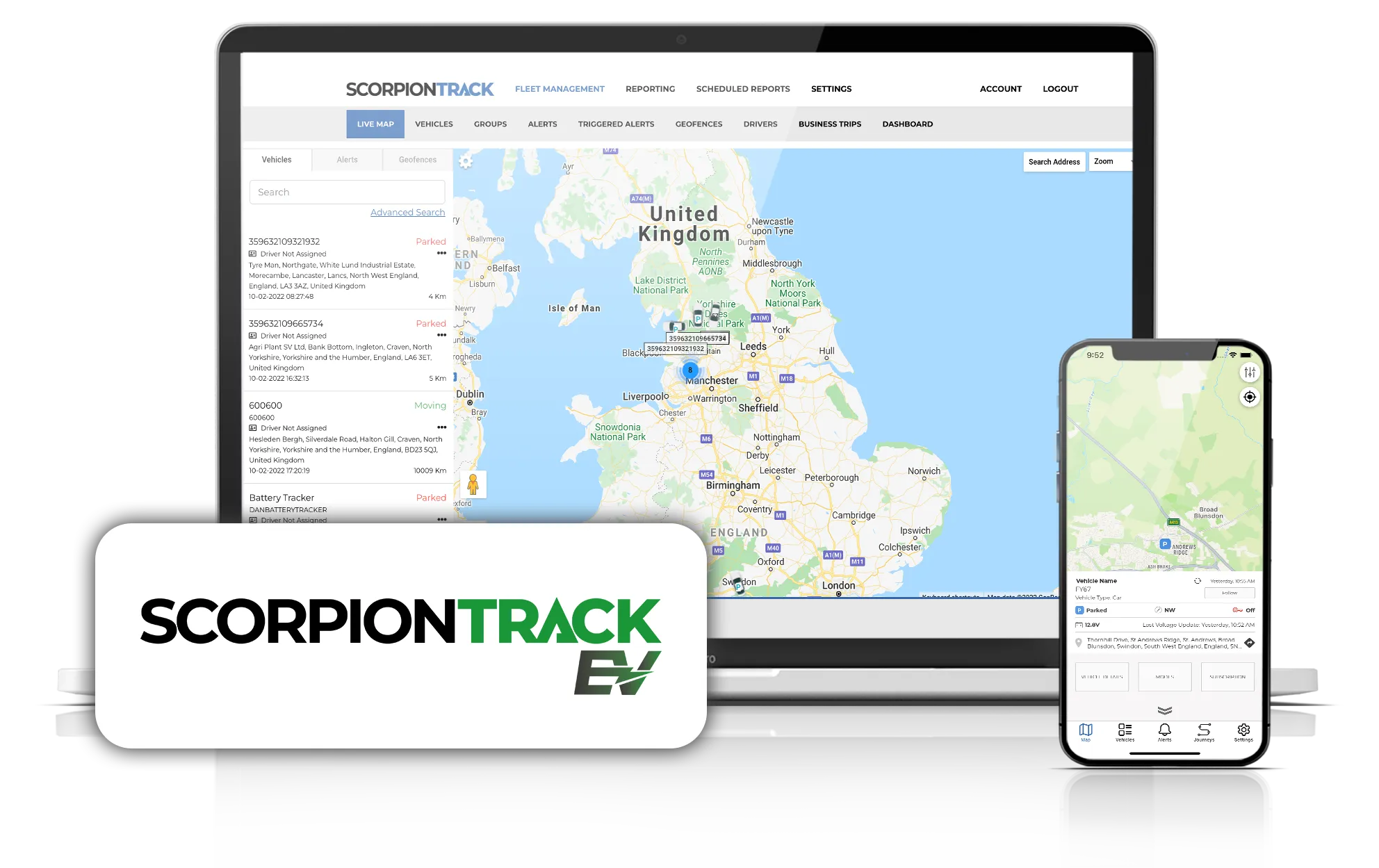


- electric vehicles
- theft prevention
- charging
- fleet security

Alec J.
Software Engineer at Scorpion Automotive
Alec J., a Software Engineer at Scorpion Automotive in Chorley, covers CAN bus, vehicle electronics and electric vehicles.
Reviewed by James M., Technical Director at Scorpion Automotive


