Electric Vehicle Security: Do EVs Need an Immobiliser?
By Alec J. Reviewed byJames M.
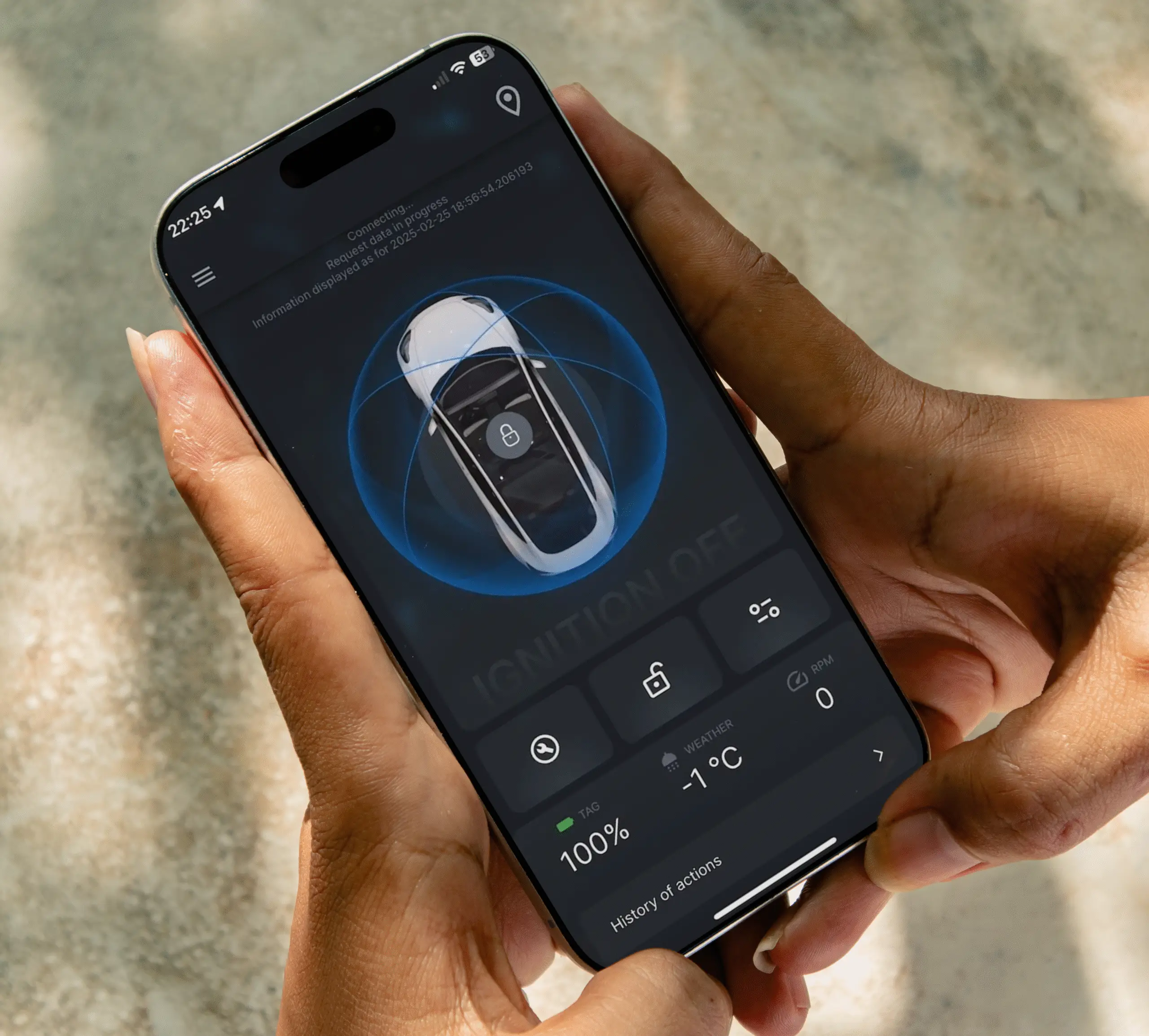
Every new electric car already has a factory immobiliser, so the real question is whether you need an electric car immobiliser on top. For most keyless EVs, it’s worth considering. The factory system trusts the key, and relay and key programming attacks fool it. An aftermarket immobiliser that needs a PIN or tag adds a check thieves can’t copy.
The short version:
- Factory fit: EVs, like other new cars, come with an immobiliser.
- Keyless is the weak point: the car accepts a relayed or cloned key as genuine.
- No engine doesn’t mean no theft: an EV drives away as quietly as it arrives.
- Second factor: a PIN or driver tag stops a key-only drive-away.
- Layer it: immobiliser for prevention, tracking for recovery.
Do electric cars have immobilisers?
Yes. In the UK and EU, new passenger cars have had to be fitted with an immobiliser since 1 October 1998 under Directive 95/56/EC, and the rule applies whatever drives the wheels (EUR-Lex). Rules elsewhere differ, so check what applies in your market.
The factory immobiliser does one job well: it stops the car being started without a recognised key. Our guide to vehicle immobilisers explained covers how that works.
The catch is the word “recognised”. If a thief can make the car recognise a key that isn’t really there, the factory immobiliser lets them go.
Why are electric cars exposed to keyless theft?
Most EVs use keyless entry and push-button start, often as standard. That convenience is what relay thieves exploit.
- One thief stands near the house with a device that picks up the key’s signal.
- A second device near the car relays it.
- The car believes its key is next to the door and opens.
- The car believes the key is inside and starts.
- The factory immobiliser sees a valid key and stays off.
This isn’t a petrol-only problem. When Thatcham Research launched its consumer security ratings in March 2019, the hydrogen fuel cell Hyundai Nexo was rated Poor because its keyless system had no protection against relay attack, while the electric Audi e-tron earned Superior (Thatcham Research). Powertrain wasn’t the difference. Keyless protection was.
Don’t motion-sensing key fobs fix it?
They help. A motion sensor fob goes to sleep when it’s been still for a while and stops answering relay devices. Thatcham welcomed them as a good short-term option in November 2019, while noting that sleep times vary from one or two minutes to 30 minutes, and that many owners have fobs without the feature (Thatcham Research).
A sleeping fob also does nothing against key programming, where a new key is added to the car through its diagnostic port. The car then has a “genuine” key of the thief’s own.
What does an aftermarket EV immobiliser add?
A second check that has nothing to do with the key.
| Attack | Factory immobiliser | Immobiliser with PIN or tag |
|---|---|---|
| Hot wiring | Stopped | Stopped |
| Relay attack | Car sees a valid key | Needs the PIN or tag as well |
| Key programming | New key accepted | Needs the PIN or tag as well |
| Stolen keys | Car starts | Needs the PIN or tag as well |
A CAN bus immobiliser works through the vehicle’s own data network rather than cut wires, which suits modern EVs with complex electronics. Our explainer What is a CAN bus immobiliser? goes into the method.
Does an immobiliser affect an EV’s battery or range?
It’s a fair question, because every accessory on an EV draws from the 12V battery that wakes the car. Fit a product made for modern vehicles, installed by a trained installer to the maker’s instructions. Ask the supplier about standby draw before you buy, the same way you would for a tracker.
Where does Scorpion fit for electric cars?
The X-Series is a CAN bus immobiliser that arms as soon as the ignition is switched off. Starting the car needs a custom PIN, entered with the car’s own buttons, or a paired ScorpionTrack S5 driver tag. A relayed or cloned key on its own won’t drive it away.
For EV owners who want prevention and recovery together, the Scorpion S5EV+ combines ScorpionTrack tracking with the X-Series. Carry the S5 ADR tag and the X-Series disarms automatically. Without the tag, a PIN is needed and the 24/7/365 monitoring team is alerted. See electric vehicle tracking for the full EV range.
How common are electric cars now?
Common enough to matter to thieves. In the UK, battery electric cars took a 20.5% share of new car registrations in September 2024, a record 56,387 cars, and fleets accounted for 75.9% of them, according to the SMMT (SMMT). Every one is a modern, connected, mostly keyless car.
If the immobiliser is beaten
An immobiliser stops the drive-away, but no single layer is perfect. If an EV does leave, a VHF beacon from the Scorpion VHF+ Recovery Network gives searchers a radio signal to follow in the last stretch, next to whatever GPS tracker is fitted. What a VHF tracker is covers the basics.
Talk to us about immobilising your EV
Driving a keyless EV and want to know what an immobiliser would add? Tell us the model.
- Speak to us about EV security
- X-Series immobiliser for PIN and tag protection
Frequently Asked Questions
Do electric cars have immobilisers?
Yes. In the UK and EU, every new passenger car has needed a factory immobiliser since 1998, whatever its powertrain. The factory system stops the car starting without a recognised key, but it can’t tell a relayed or cloned key from the real one.
Can electric cars be stolen with relay attacks?
Yes. Most EVs are keyless, and relay theft targets the keyless system, not the engine. Thatcham’s 2019 ratings showed powertrain made no difference: what mattered was whether the keyless system had protection against relay attack.
Is an aftermarket immobiliser safe to fit to an electric car?
It should be, when it’s designed for modern vehicles and fitted by a trained installer. A CAN bus immobiliser works through the car’s data network rather than cut wiring. Ask the supplier about standby power draw on the 12V battery.
What’s the best immobiliser for an electric car?
Look for one that arms automatically and needs a second factor, a PIN or a driver tag, that a thief can’t relay or clone. Check it’s compatible with your model, and consider pairing it with monitored tracking for recovery.
Does an EV immobiliser affect the warranty?
Ask your dealer before fitting, and get the answer in writing, because warranty terms vary by manufacturer. A CAN bus immobiliser avoids cutting the vehicle’s wiring, which is often the concern.
Speak to our team
Questions about vehicle security, tracking or fleet telematics? Our UK team will point you to the right product for your vehicle or fleet.
Related Products
View all products →


- electric vehicles
- immobilisers
- keyless theft
- X-Series
- VHF+

Alec J.
Software Engineer at Scorpion Automotive
Alec J., a Software Engineer at Scorpion Automotive in Chorley, covers CAN bus, vehicle electronics and electric vehicles.
Reviewed by James M., Technical Director at Scorpion Automotive


