Electric Car Tracker: What an EV Tracking System Must Do
By Alec J. Reviewed byJames M.
An electric vehicle tracking system has to manage two things a petrol-car tracker never faces: it must sip almost nothing from the 12V battery while the car sleeps, and it must still be watched round the clock. Add Thatcham approval and a driver tag, and you have the short list for any electric car tracker.
What to check, in brief:
- Power draw: a low standby current protects the 12V battery that wakes the car.
- Thatcham approval: S5 or S7, if your insurer asks for a category.
- 24/7 monitoring: someone acts on an alert at 3am, not just an app notification.
- Driver recognition: a tag that tells the system the right person is driving.
- Fleet features: live maps, alerts and reports for business users.
Why do electric vehicles need their own approach to tracking?
EVs are now a large and growing share of what’s on UK roads. In 2025, 473,348 new battery electric cars were registered in the UK, 23.4% of the 2,020,520 new cars sold, according to the SMMT (SMMT, January 2026).
Thieves follow the market. And from a security point of view, an EV is a modern connected car like any other. Many use keyless entry and push-button start, so they face the same relay and key-programming attacks. Our guide to what a relay attack is explains that method.
What makes EVs different is power.
Why does power draw matter on an EV?
You might expect a car with a huge traction battery to have power to spare. It doesn’t work like that.
The traction battery drives the motor. The car’s electronics, including its locks, alarm and computers, still run from a conventional 12V battery. The car tops that 12V battery up from the traction battery when it’s awake or charging. When it’s parked and asleep, the 12V battery is on its own.
Every accessory fitted to an EV adds a small load on that 12V supply. If the tracker’s standby draw is high and the car sits for a fortnight at an airport car park, the owner can come back to a car that won’t wake up.
So the first question to ask any supplier is simple. What is the tracker’s power draw when the vehicle is parked, and has the product been built with EVs in mind?
ScorpionTrack has built its battery technology into its S5 and S7 trackers so the power draw is minimal, which reduces any impact on the EV. More on our electric vehicle tracking page.
Thatcham categories: S5 and S7
In the UK, insurers describe trackers in Thatcham categories. There are two:
| Category | What it adds | Who it suits |
|---|---|---|
| S7 | Stolen vehicle tracking with alerts on unauthorised movement | Owners who want recovery-grade tracking |
| S5 | Everything in S7 plus Automatic Driver Recognition tags and 24/7 monitoring | Higher-value and higher-risk vehicles, or where the insurer specifies S5 |
S5 is the higher tier. If your insurer has named a category, buy the one they ask for. If they haven’t, the decision comes down to value and risk.
Why does 24/7 monitoring matter?
A tracker that only sends a notification to an app relies on you seeing it, at whatever hour, and knowing what to do next.
With a monitored system, a trained team receives the alert, checks with the owner and works with the police if the vehicle has been stolen. ScorpionTrack alerts go to a 24/7 Secure Control Centre that monitors around the clock. Our stolen vehicle tracking page explains the process from alert to recovery.
What is driver recognition?
S5 systems use an Automatic Driver Recognition (ADR) tag, a small fob the driver carries. If the car moves without a recognised tag present, the system treats it as a possible theft.
That’s what turns a tracker from a recovery tool into an early warning. A relay attack can get the car started, but it can’t fake a tag the owner has in their pocket.
Adding an immobiliser
Tracking finds a stolen car. An immobiliser stops it being driven away in the first place. On a keyless EV, pairing the two covers both.
The Scorpion X-Series is a CAN bus immobiliser disarmed with a PIN entered on the car’s own buttons. Paired with a ScorpionTrack S5, the driver’s tag disarms it automatically, and an attempt to drive without the tag raises an alert with the monitoring team.
EV fleets: tracking that earns its keep
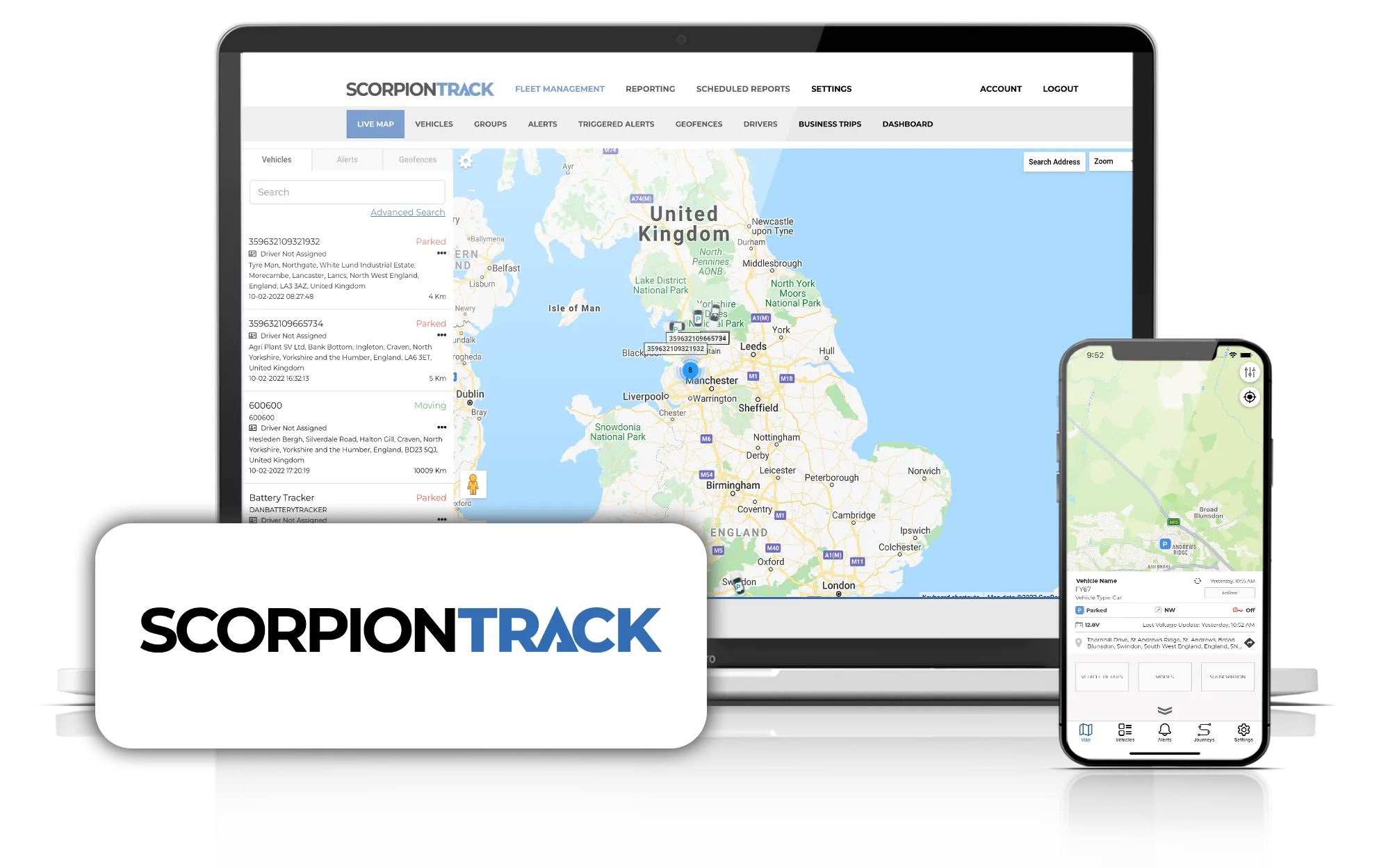
For businesses, an EV tracking system does more than protect against theft. A telematics platform adds live location, journey history, alerts and geofences across the fleet.
When you assess a fleet system for EVs, ask how it handles vehicles parked for long spells, whether its hardware has been tested on the models you run, and what reporting you get. Our fleet management page covers AutoM8.
Questions to put to every supplier
Put the same six questions to each company, and compare the answers side by side.
| Feature | Why it matters on an EV | What to ask |
|---|---|---|
| Standby draw | The 12V battery wakes the car | What current does the unit draw while parked? Ask for it in writing. |
| Thatcham category | Insurers name S5 or S7 | Which category, and can I see the certificate? |
| Monitoring | An alert needs a person to act on it | Who answers at 3am, and where are they based? |
| Driver tag | A relayed fob can start the car but cannot fake a tag | Does the tag also disarm an immobiliser? |
| Immobiliser pairing | Keyless EVs are relay targets | Can it be paired with a CAN bus immobiliser? |
| Fitting | High-voltage cabling sits close to the work | Is the installer trained on electric vehicles? |
Adding a radio layer to EV tracking
Satellite and mobile signals fail inside metal-clad buildings, which is where a stolen EV is often taken. A VHF beacon from the Scorpion VHF+ Recovery Network adds a radio signal for that situation and pairs with whichever tracker is already fitted, so an EV fleet needn’t change telematics provider. Our explainer on what a VHF tracker is covers the basics.
Talk to us about tracking your EV or EV fleet
Want to protect an electric car or an EV fleet? Tell us the vehicles and we’ll recommend the right combination.
- Speak to us about EV tracking
- Electric vehicle tracking for ScorpionTrack on EVs
Frequently Asked Questions
Will a tracker drain my electric car’s battery?
Every accessory adds some load to the 12V battery, so choose a tracker with very low standby power draw. ScorpionTrack’s S5 and S7 use battery technology that keeps the power draw minimal on EVs.
Do electric cars get stolen?
Yes. Many EVs use keyless entry and push-button start, which makes them open to the same relay and key-programming attacks as other modern cars.
What is the difference between an S5 and S7 tracker?
Both are Thatcham stolen vehicle tracking categories. S7 tracks and alerts on unauthorised movement. S5 adds driver recognition tags and 24/7 monitoring, and is the higher category.
Does my insurer need a Thatcham-approved tracker on my EV?
It depends on the vehicle and the insurer. Some policies name a Thatcham category as a condition of cover. Check your policy documents or ask your insurer which category they need.
Can I track a fleet of electric vans?
Yes. A fleet telematics system shows every vehicle on a live map with alerts, journey history and geofences. Check the hardware has low standby draw and has been fitted to the models you run.
Speak to our team
Questions about vehicle security, tracking or fleet telematics? Our UK team will point you to the right product for your vehicle or fleet.
Related Products
View all products →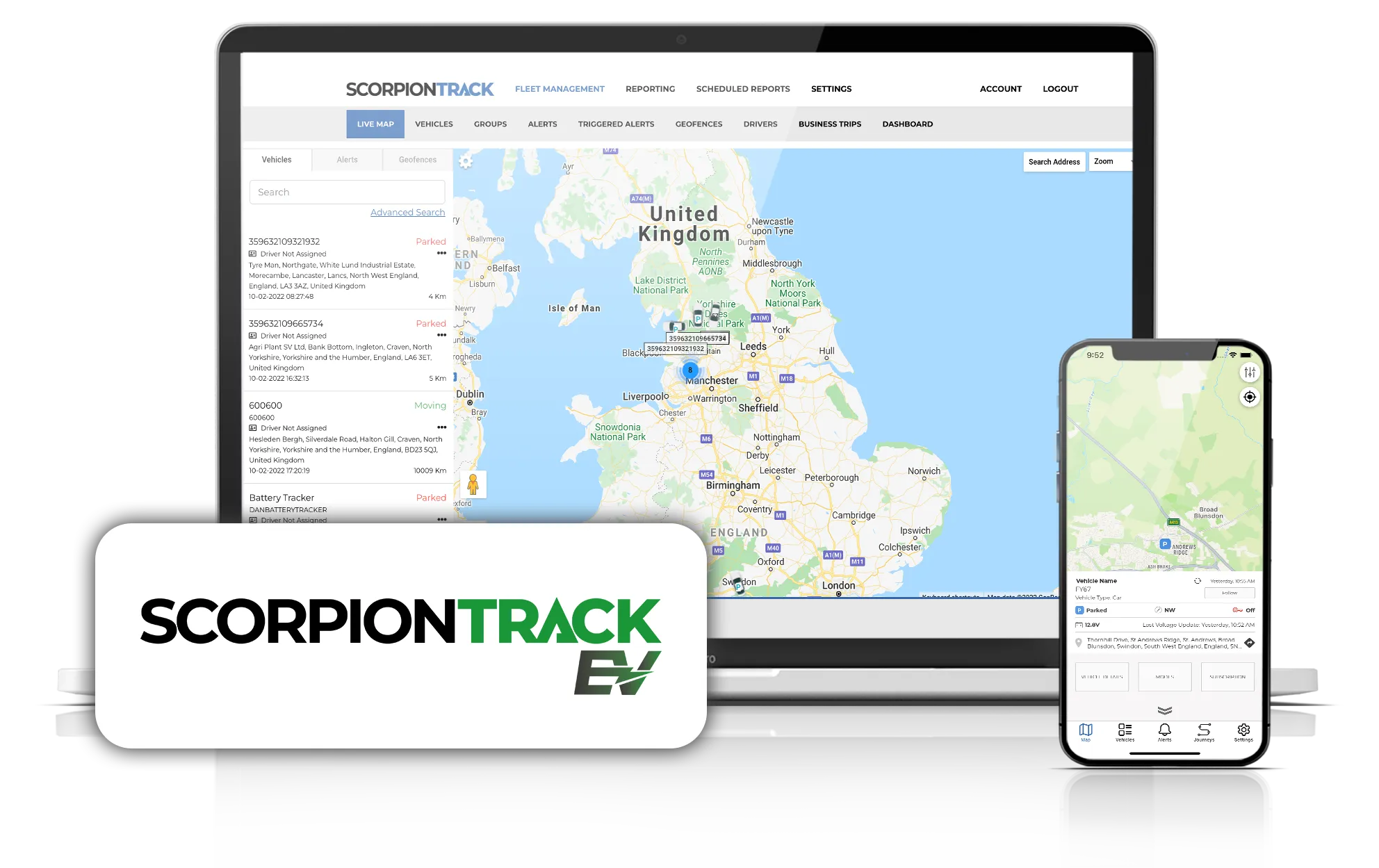

- electric vehicles
- tracking
- ScorpionTrack
- Thatcham
- VHF+

Alec J.
Software Engineer at Scorpion Automotive
Alec J., a Software Engineer at Scorpion Automotive in Chorley, covers CAN bus, vehicle electronics and electric vehicles.
Reviewed by James M., Technical Director at Scorpion Automotive


