Installing Aftermarket Kit on EVs: High-Voltage Safety
By Sam P. Reviewed byJames M.
EV installer safety starts with one fact: electric and hybrid vehicles carry high-voltage systems that can kill, even when the car looks switched off. Aftermarket fitters rarely touch those systems, but they work around them, so they need to know where the high voltage runs and what their training covers.
Key facts:
- High voltage means a working voltage above 60V and up to 1,500V DC, or above 30V and up to 1,000V AC, under UN Regulation No 100.
- Up to 650V DC can be found in electric and hybrid vehicles, according to HSE, against 12V or 24V in conventional ones.
- Orange cabling usually marks high-voltage cables.
- Competence varies with the task. HSE describes four categories of work, from valeting and sales up to working on high-voltage systems.
- IMI TechSafe recognises EV qualifications at Level 2, Level 3 and Level 4.
Why is EV installation different?
Because of what’s under the floor and behind the trim. A conventional car’s electrics run at 12V or 24V. HSE notes that electric and hybrid vehicles can use up to 650V DC, and that contact with more than 110V DC in dry conditions can be fatal (HSE).
Most aftermarket security work stays on the 12V side. A tracker, an immobiliser or a CAN interface connects to the low-voltage network, not the traction battery. But the installer still removes trim, drills, routes cables and works in places where high-voltage cables may run.
That’s the risk to manage. It isn’t the job itself; it’s what’s next to it.
How do you recognise high voltage in a vehicle?
Learn the definition and the visual cues.
- The definition: UN Regulation No 100 classes a component or circuit as high voltage if its working voltage is above 60V and up to 1,500V DC, or above 30V and up to 1,000V AC rms (UN R100).
- The colour: HSE says high-voltage cables are usually coloured orange, and should be checked for damage before work starts (HSE).
- The routing: find out where high-voltage cables run before cutting, drilling or welding.
- The paperwork: the vehicle maker’s repair information shows where high-voltage components sit.
Never assume a cable is safe because it’s thin, out of sight or not orange. Check the vehicle data.
What does HSE guidance say about working on EVs?
HSE’s guidance for motor vehicle repair sets out the main controls. Among them (HSE):
- Competence matched to the work. The level needed varies greatly with the job, and HSE describes four categories of work, from valeting and sales up to working on high-voltage systems.
- Isolation. High-voltage systems must be isolated, locked off and proven dead by testing before any work on them, and some components can hold a dangerous voltage after isolation.
- Tools and test equipment. Use insulated tools and test equipment that meets GS38.
- Live work as a last resort, only where there’s no other way, with PPE as the final measure.
- Control the area. Use warning signs, segregate the work area and keep remote keys away from the vehicle.
For a security installer, the practical message is to stay within the category of work you’re trained for, and to stop if a job would take you into high-voltage components.
What qualifications should an EV installer hold?
The IMI’s TechSafe recognition lists eligible EV qualifications at three levels (IMI):
| Qualification | What it covers |
|---|---|
| Level 2 Award in Electric/Hybrid Vehicle Routine Maintenance Activities | Routine work on electric and hybrid vehicles |
| Level 3 Award in Electric/Hybrid Vehicle System Repair and Replacement | Repair and replacement of system components |
| Level 4 Award in the Diagnosis, Testing and Repair of Electric/Hybrid Vehicles and Components | Diagnosis and repair, including live high-voltage work |
TechSafe recognition is maintained through CPD over a three-year cycle. Heavy-vehicle versions of the Level 2 and 3 awards are also listed.
The skills gap is real. In August 2024 the IMI reported 58,800 technicians qualified to work on EVs, 24% of the UK automotive workforce, and predicted a shortfall of 3,000 by 2031 (IMI).
What else should installers check on an EV?
Safety isn’t only about high voltage. Fitting kit to an EV raises two other questions.
- The 12V battery. A parked EV relies on it to wake up, so a device with a high parked draw can leave the car unable to start. Our guide to protecting the 12V battery covers how to fit without flattening it.
- Hybrids. A hybrid carries a high-voltage system and a conventional engine, so both sets of risks apply. See hybrid vehicle security for the security side.
How Scorpion supports EV installers
Scorpion’s security products for EVs, including the X-Series CAN bus immobiliser and ScorpionTrack tracking, connect to the vehicle’s low-voltage network. Our electric vehicle security page covers the options.
We support installers with product and fitment training and a UK technical desk. If you fit vehicle security professionally, our approved installer programme explains how to work with us. High-voltage qualifications themselves come from recognised training providers.
Talk to our technical team before an EV install
Fitting security to electric and hybrid vehicles? Talk to our technical team about the vehicle before you start.
- Speak to us about EV installations
- Approved installer to work with Scorpion
Frequently Asked Questions
Is it safe to fit a tracker to an electric car?
Yes, when it’s done by a competent installer who stays on the 12V side. Trackers and immobilisers connect to the low-voltage network, but the fitter must know where high-voltage cables run and avoid them when removing trim, drilling or routing wires.
What voltage counts as high voltage in an EV?
UN Regulation No 100 classes a circuit as high voltage if its working voltage is above 60V and up to 1,500V DC, or above 30V and up to 1,000V AC. HSE notes EVs can use up to 650V DC.
What colour are high-voltage cables in electric cars?
HSE says high-voltage cables are usually coloured orange. Check them for damage before starting work and find their routing first, but use the vehicle maker’s information too, rather than relying on colour alone.
What is IMI TechSafe?
IMI TechSafe is the Institute of the Motor Industry’s recognition for technicians qualified to work safely on electric and hybrid vehicles. Eligible qualifications run from a Level 2 award in routine maintenance up to Level 4 in diagnosis and repair.
Do security installers need an EV qualification?
It depends on the work. HSE says the competence needed varies greatly with the task. An installer working only on the 12V side needs awareness of high-voltage risks; anyone working on high-voltage components needs the matching higher-level training.
Speak to our team
Questions about vehicle security, tracking or fleet telematics? Our UK team will point you to the right product for your vehicle or fleet.
Related Products
View all products →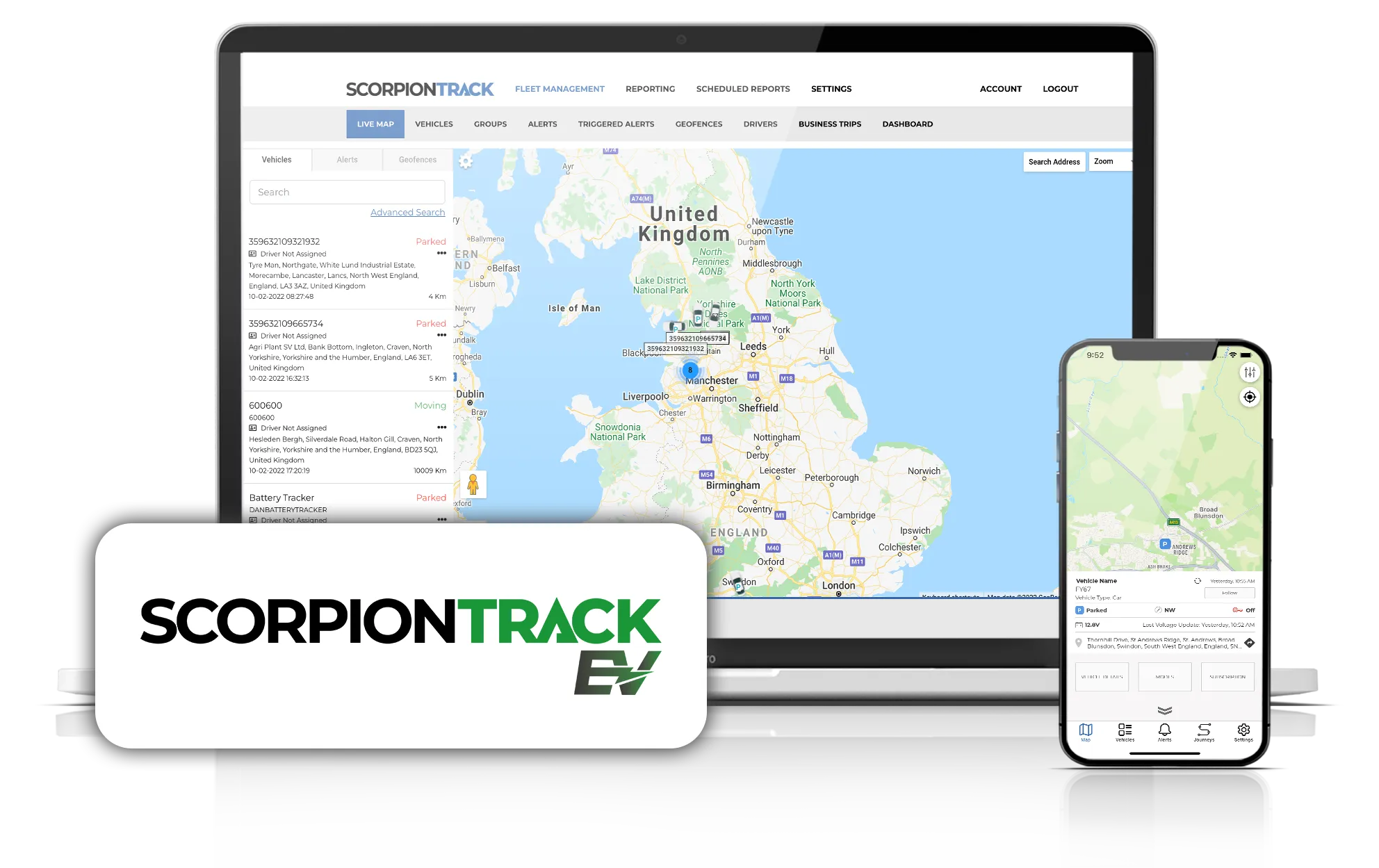


- electric vehicles
- installers
- health and safety
- training

Sam P.
R&D Technician at Scorpion Automotive
Sam P. works as an R&D Technician at Scorpion Automotive in Chorley, covering commercial and specialist vehicles, trade partners, and fitting and vehicle electrics.
Reviewed by James M., Technical Director at Scorpion Automotive


