Motorhome PIR Sensors: Wireless Locker and Habitation Protection
By Sam P. Reviewed byJames M.
A motorhome PIR sensor is a passive infrared detector that senses body heat moving across its field of view and tells the alarm someone is inside. Wireless PIR sensors suit motorhomes because they cover a defined zone, such as a locker, garage or lounge, without cables running through finished furniture.
Key facts:
- PIR means passive infrared: the sensor detects heat, it doesn’t send anything out.
- Zones: each sensor watches one area, so you can protect the garage while you sleep in the bed.
- Wireless sensors talk to the alarm by radio, so fitting doesn’t mean stripping out the interior.
- Placement decides how well a PIR works. Point it away from heaters and windows.
- The S37 in the Scorpion S-Series has a built-in RF receiver for wireless PIR sensors.
How does a PIR sensor work?
Every warm body gives off infrared energy. A PIR sensor uses an element split into two halves that both see the same scene. As Adafruit’s technical guide on how PIRs work explains, a person crossing the field of view reaches one half first, creating a difference between the two, and then the other. That change is what the sensor treats as movement.
Two details make PIRs practical:
- A Fresnel lens on the front widens the area the sensor can see.
- They’re passive. The sensor only receives, so it uses very little power, which matters for a battery-powered wireless unit.
Because it reacts to moving heat, a PIR ignores a still, cold room. It’s well matched to the inside of a parked motorhome.
PIR vs ultrasonic sensors in a motorhome
Most vehicle alarms use ultrasonic sensors for interior protection. They fill the cabin with high-frequency sound and watch for disturbance. That works well in a car’s single open space.
A motorhome is different:
| Ultrasonic sensor | Wireless PIR sensor | |
|---|---|---|
| How it detects | Disturbance in a sound field | Moving body heat |
| Best space | One open cabin | Defined zones such as lockers, garage, lounge |
| Affected by curtains and partitions | Yes, they block the sound field | Only within its own line of sight |
| Zoning for night use | Usually all or nothing | Each sensor can cover a separate area |
| Wiring | Wired to the alarm unit | Wireless link to the alarm |
The two aren’t rivals. A good setup uses ultrasonics for the cab and PIRs for the habitation area and storage.
Where should you put PIR sensors in a motorhome?
Placement decides whether a PIR protects you or annoys you. Start with the spaces a thief goes for first.
- The rear garage, where bikes, tools and outdoor kit live.
- External lockers that can be forced from outside.
- The habitation door area, covering the route anyone takes coming in.
- The lounge or dinette, for when the van is empty.
And a few things to avoid:
- Heaters and hot-air outlets, which create moving warm air.
- Windows and rooflights that let sunlight sweep across the sensor.
- Pets left aboard, unless the sensor’s zone excludes them.
Test each sensor after fitting by walking through its zone and checking the alarm responds.
Which motorhome alarms accept wireless PIR sensors?
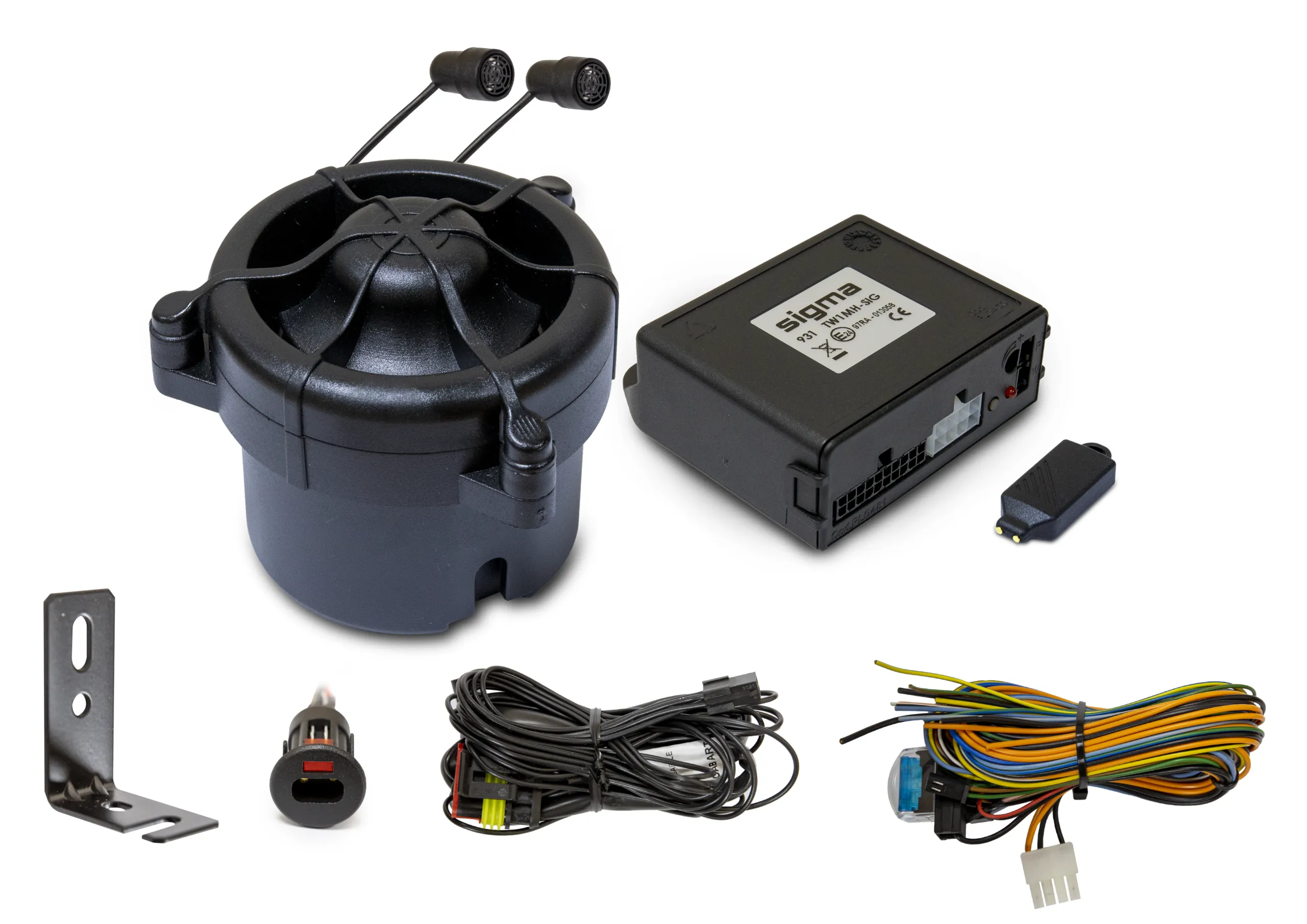
The alarm needs a receiver that can pair with the sensors. In Scorpion’s S-Series alarms range, the S37 is a Thatcham 2 to 1 CAN-Bus upgrade alarm with a built-in RF receiver for additional PIR wireless sensors, so it can protect habitation areas and lockers. It’s suitable for motorhomes, and a 4-button remote control upgrade is available.
Our motorhome alarm guide compares the S34 and S37 and explains how Thatcham categories apply to motorhomes, and Sigma S34 vs S37 sets the two side by side.
Why does locker and habitation protection matter?
Motorhomes spend much of the year in storage, and that’s where many thefts happen. The national vehicle crime intelligence service, NaVCIS, has reported a significant increase in motorhome thefts, predominantly from storage sites, with several vehicles often taken once a site’s security is compromised. Its first piece of advice to owners is to fit security devices and set alarms.
NaVCIS also notes that parts are often stolen from leisure vehicles while they sit in storage. Catching that is exactly the job of locker and habitation sensors.
Talk to us about sensor placement
Tell us your motorhome’s layout and where you store it, and we’ll suggest where wireless sensors would add the most protection.
- Speak to us about motorhome sensors
- S-Series alarms including the S37 with wireless PIR support
Frequently Asked Questions
What is a PIR sensor on a motorhome alarm?
It’s a passive infrared sensor that detects body heat moving through its field of view. On a motorhome alarm it protects a defined zone, such as a locker, garage or the living area, and triggers the alarm if someone moves inside it.
Are wireless PIR sensors reliable in a motorhome?
Yes, when they’re placed well and paired with an alarm built to receive them. Keep them away from heaters, hot-air vents and direct sunlight, test each one after fitting and replace batteries as recommended.
Can I leave PIR sensors on while sleeping in my motorhome?
You can leave sensors on in empty areas such as the garage or lockers while switching off those in the space you’re sleeping in. That’s one of the main advantages of zoned wireless sensors.
Is PIR better than ultrasonic for a motorhome?
They do different jobs. Ultrasonic sensors suit the open cab; PIRs suit separate habitation zones and storage, where curtains and partitions would block an ultrasonic field. Most well-protected motorhomes use both.
Which Scorpion alarm works with wireless PIR sensors?
The S37 from the Scorpion S-Series. It’s a Thatcham 2 to 1 CAN-Bus upgrade alarm with a built-in RF receiver for wireless PIR sensors, suitable for motorhomes, with habitation area and locker protection.
Speak to our team
Questions about vehicle security, tracking or fleet telematics? Our UK team will point you to the right product for your vehicle or fleet.
Related Products
View all products →

- motorhome security
- S-Series
- alarms
- sensors

Sam P.
R&D Technician at Scorpion Automotive
Sam P. works as an R&D Technician at Scorpion Automotive in Chorley, covering commercial and specialist vehicles, trade partners, and fitting and vehicle electrics.
Reviewed by James M., Technical Director at Scorpion Automotive


