Sigma S34 vs S37: Which Motorhome Alarm Suits You?
By Mike B. Reviewed byJames M.
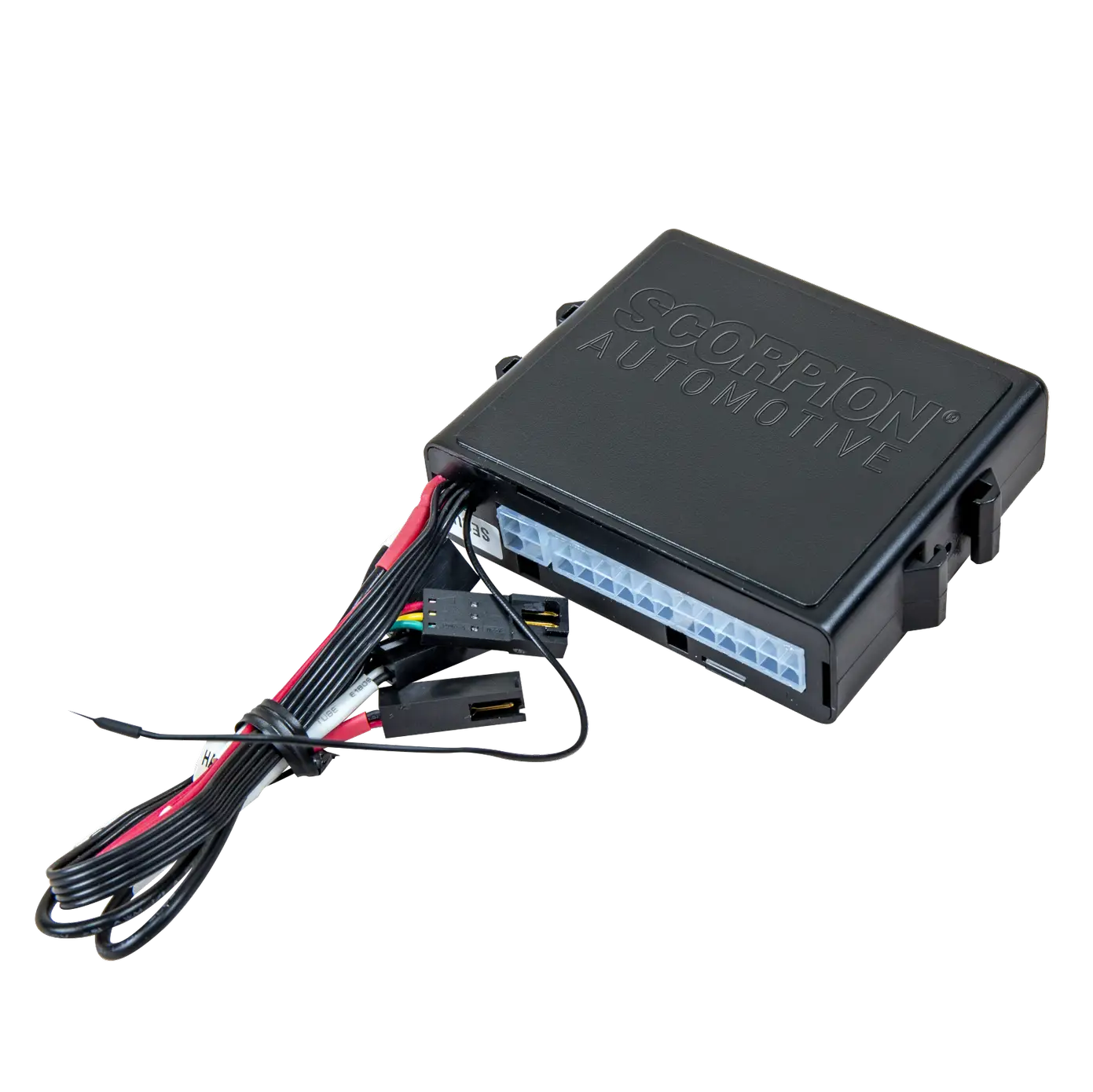
The Sigma S34 and S37 are the two Sigma alarms Scorpion lists as suitable for motorhomes. Both are Thatcham Category 2-1 upgrade alarms. The S34 is a plip upgrade that adds extra radio keys. The S37 is a CAN bus upgrade with a built-in receiver for wireless PIR sensors in the habitation area and lockers.
The short version:
- Same rating: both are Thatcham Category 2-1.
- Same core cover: perimeter and ultrasonic interior protection.
- S34: plip upgrade alarm with additional radio keys.
- S37: CAN bus upgrade alarm with wireless PIR sensor support and a 4-button remote upgrade.
- The deciding question: do you need sensors in the living area and lockers?
What do the Sigma S34 and S37 have in common?
More than most people expect. Both come from the Scorpion S-Series alarm range, the range also sold under the Sigma name, and both share the essentials.
- Thatcham Category 2-1. Each one adds alarm cover to a vehicle that already has a Category 2 immobiliser. Category 2-1 exists for exactly that case: an aftermarket alarm added to a car with a Category 2 immobiliser (Motoring Research).
- Perimeter protection for the cab doors, bonnet and other opening panels.
- Ultrasonic interior protection that notices movement inside.
- Listed as suitable for motorhomes on Scorpion’s product page.
So if your insurer has asked for a Thatcham alarm on a motorhome with a factory immobiliser, either model answers the category question. The choice comes down to how much of the vehicle you want watched and how you’d like to arm it.
How are the S34 and S37 different?
The differences sit in two places: the remote and the reach.
| Sigma S34 | Sigma S37 | |
|---|---|---|
| Type | Plip upgrade alarm | CAN bus upgrade alarm |
| Remotes | Additional radio keys | 4-button remote upgrade available |
| Built-in RF receiver for wireless PIR sensors | Not listed | Yes |
| Habitation area and locker protection | Not listed | Yes |
| Thatcham rating | Category 2-1 | Category 2-1 |
The S34 is the more straightforward fit. It’s a plip upgrade, which means it works with the vehicle’s locking, and it comes with additional radio keys.
The S37 goes further into the body of the motorhome. Its receiver talks to wireless passive infrared sensors, which detect the heat of a person moving through their field of view. Place them in the living area or a locker and the alarm covers spaces the cab sensors never see. There’s a full walk-through in Sigma S37 alarm explained, and our post on wireless PIR sensors for lockers and living areas shows where they earn their place.
Which Sigma motorhome alarm should you choose?
Work through these questions in order.
- What does your insurer ask for? If it names a Thatcham category, check that a 2-1 upgrade meets it on your vehicle. Both models are 2-1.
- What’s in the habitation area and lockers? Bikes, generators, chairs and electronics live there. If you’d want to know someone was inside, the S37’s PIR sensors earn their keep.
- How is the vehicle built? The S37 is a CAN bus upgrade alarm for vehicles whose signals run on the data network. An installer will confirm which model suits your base vehicle.
- How do you want to arm it? The S34’s extra radio keys suit owners who share the vehicle. The S37 has a 4-button remote upgrade if you want a dedicated alarm remote.
As a rough guide, and subject to your installer’s check, the S34 suits a smaller van conversion where the cab and living space are one open area. The S37 suits a coachbuilt motorhome with a separate habitation door and external lockers.
Can you add tracking to a Sigma motorhome alarm?
Yes. An alarm deals with intrusion. It won’t find a vehicle that has been driven off.
Scorpion Defender S7 pairs the S37 alarm with a ScorpionTrack S7 tracker and 24/7 theft monitoring, with alarm alerts by app, email or SMS. Whichever alarm you fit, a monitored tracker is the layer that helps recover the vehicle. If you’re still comparing all six Sigma models, see the full Sigma range compared.
A VHF+ beacon can sit next to whichever tracker is fitted, giving searchers a second signal when a motorhome is under cover. See the UK VHF tracker options. It is in pre-launch.
Talk to us about the S34 or S37
Choosing between the S34 and S37, or need help with one already fitted? Tell us the base vehicle, the layout and what your insurer asks for.
- Speak to us about motorhome alarms
- S-Series alarms to see both models
Frequently Asked Questions
Is the Sigma S34 Thatcham approved?
Yes. The S34 is a Thatcham Category 2-1 plip upgrade alarm with additional radio keys. Category 2-1 means it adds alarm cover to a vehicle that already has a Category 2 immobiliser.
Which Sigma alarm is best for motorhomes?
Both the S34 and S37 are listed as suitable for motorhomes. Choose the S37 if you want wireless PIR sensors protecting the habitation area and lockers. The S34 suits owners who mainly need cab protection and extra radio keys.
Can the Sigma S34 protect motorhome lockers?
Locker and habitation protection through wireless PIR sensors is listed for the S37, not the S34. If lockers hold valuable kit, the S37 is the model built around that.
Do I need an immobiliser as well as a Sigma S34 or S37?
Both are Category 2-1 alarms, so they rely on the vehicle already having a Category 2 immobiliser. Most modern base vehicles have a factory immobiliser, but ask your installer to confirm on your motorhome.
Can I upgrade from an S34 to an S37 later?
Talk to Scorpion’s UK technical team or your installer. They can confirm whether the S37 suits your base vehicle and what changing systems would involve.
Speak to our team
Questions about vehicle security, tracking or fleet telematics? Our UK team will point you to the right product for your vehicle or fleet.
Related Products
View all products →


- Sigma
- S34
- S37
- motorhome security
- VHF+

Mike B.
Software Engineer at Scorpion Automotive
Mike B. is a Software Engineer at Scorpion Automotive in Chorley. Vehicle security, immobilisers and keyless theft are the areas Mike covers.
Reviewed by James M., Technical Director at Scorpion Automotive