PIN Code Immobiliser: How Disarming with Car Buttons Works
By Mike B. Reviewed byJames M.
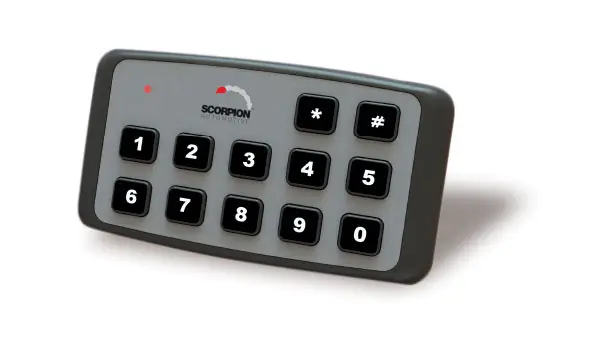
A PIN code immobiliser stops a vehicle being driven until you enter a secret code. Older systems use a keypad on the dashboard. Newer CAN bus immobilisers let you enter the code using the car’s own buttons, such as steering wheel or window switches. Either way, a relayed or cloned key can’t release the car.
Key facts:
- Two types: a dedicated keypad, or a sequence of the car’s existing buttons.
- Arms itself: good systems set automatically when the ignition goes off.
- Beats key attacks: the PIN lives in your head, so it can’t be relayed or copied from the key.
- Keypad example: Scorpion FleetLock needs a 4-digit PIN and immobilises 10 seconds after ignition-off.
- Button example: the Scorpion X-Series takes a custom sequence entered via the dash or steering wheel.
What is a PIN code immobiliser?
An immobiliser stops the engine running or the vehicle being driven without authorisation. The factory immobiliser in every modern car uses the key as that authorisation. A PIN code immobiliser adds a second, separate check: a code only the driver knows.
That matters because modern theft attacks the key. Relay devices fake the key’s presence. Programming tools add a new key. Neither gives the thief your PIN.
There are two ways to enter that code, and they suit different vehicles and users.
How does a keypad immobiliser work?
A keypad immobiliser has its own numbered keypad, fitted where the driver can reach it. You enter the code, the system releases, and you start the vehicle.
Scorpion’s FleetLock system for vans is a clear example. Its immobiliser works like this:
- Ignition off. The vehicle immobilises 10 seconds later, whether or not the key is still in the ignition.
- Status light. An LED shows that immobilisation is active.
- Enter the PIN. The driver enters a 4-digit code with both front doors closed.
- Start within 10 seconds. If the ignition isn’t turned in time, the system resets and the PIN is needed again.
FleetLock’s immobiliser operates independently of the vehicle’s computer, which prevents theft by electronic hacking through the diagnostic (OBD) port. The trade-off is that the keypad is visible. That suits fleets, where a clear and consistent routine for every driver matters more than hiding the system.
How does a button-sequence PIN work?
A CAN bus immobiliser joins the vehicle’s network, so it can see when you press the car’s own buttons. Instead of a keypad, your PIN becomes a sequence of existing controls.
The X-Series immobiliser works this way. You choose any combination of buttons and switches in your car, which makes the code unique to you and your vehicle. A typical drive looks like this:
- Get in and switch the ignition on.
- Enter your sequence via the dash or steering wheel controls.
- Drive as normal.
- Switch off. The X-Series arms itself again straight away.
Nothing on the dashboard gives it away. A thief doesn’t know an immobiliser is fitted, let alone which buttons matter. Our page on how a CAN bus immobiliser works covers the network side.
Keypad or car buttons: which is better?
Both stop a relayed or cloned key driving the vehicle away. The choice comes down to how the vehicle is used.
| Keypad immobiliser | Button-sequence (CAN) immobiliser | |
|---|---|---|
| Where you enter the code | Dedicated keypad | Car’s own buttons |
| Visible to a thief | Yes | No |
| Code style | Fixed digits (FleetLock: 4) | Custom sequence of controls |
| Works independently of vehicle computer | Yes (FleetLock) | Connects to the CAN bus |
| Best fit | Fleets and multi-driver vans | Private cars, 4x4s, vans |
| Driver tag option | Depends on system | Yes, with X-Series |
For private cars and high-value 4x4s, hidden button entry is usually the better fit. For a mixed fleet with many drivers, a clear keypad routine can be simpler to manage.
People often call the hidden button type a “ghost” immobiliser. Our guide to what a ghost immobiliser is explains where that name comes from.
How do you choose a good immobiliser PIN?
Your PIN is only as strong as how you pick it and how you keep it.
- Avoid the obvious. Don’t use a sequence a thief might try first, such as pressing one button repeatedly.
- Make it memorable to you. You’ll enter it every drive unless you use a driver tag.
- Keep it private. Enter it out of sight, especially in car parks.
- Change it if shared. If a garage or friend has learned it, ask your installer to reset it.
If entering a code every time sounds like a chore, a driver tag removes that step. With the X-Series and a ScorpionTrack S5, the tag disarms the immobiliser automatically as you get in.
What does an install involve?
A PIN code immobiliser is a professional fit. For the X-Series, a trained fitter connects it to your vehicle’s network, tests it and sets up your custom PIN and any driver tag. Because it talks to the loom rather than cutting into it, the installation is clean.
Our X-Series price and installation page explains how to get a quote for your vehicle.
Talk to us about a PIN code immobiliser
Thinking about a PIN code immobiliser? Tell us your vehicle and how many people drive it, and we’ll suggest the right setup.
- Speak to us about PIN code and driver tag immobilisers
- X-Series immobiliser for button-sequence PIN protection
Frequently Asked Questions
What is a PIN code immobiliser?
It’s an immobiliser that won’t let the vehicle be driven until a secret code is entered. The code goes in on a dedicated keypad or, with CAN bus immobilisers such as the Scorpion X-Series, as a sequence of the car’s own buttons.
Do I have to enter the PIN every time I drive?
With a PIN-only setup, yes, after each time the ignition has been off. With the X-Series you can also use a driver tag, which disarms the immobiliser automatically as you get in when paired with a ScorpionTrack S5.
Can a thief see which buttons I press?
They could if they watched you closely, so enter the code out of sight. A button-sequence immobiliser has no visible keypad, so a thief doesn’t know one is fitted or which controls form the code.
Does a PIN code immobiliser stop relay theft?
Yes. A relay attack fakes the key’s presence, but it can’t supply your PIN. The car can be opened, but the immobiliser won’t release it, so it can’t be driven away.
Is a keypad immobiliser good for vans?
It suits fleets well. Scorpion FleetLock immobilises 10 seconds after ignition-off, needs a 4-digit PIN to deactivate and works independently of the vehicle’s computer, giving every driver the same simple routine.
Speak to our team
Questions about vehicle security, tracking or fleet telematics? Our UK team will point you to the right product for your vehicle or fleet.
Related Products
View all products →


- PIN code
- immobilisers
- CAN bus
- X-Series
- FleetLock

Mike B.
Software Engineer at Scorpion Automotive
Mike B. is a Software Engineer at Scorpion Automotive in Chorley. Vehicle security, immobilisers and keyless theft are the areas Mike covers.
Reviewed by James M., Technical Director at Scorpion Automotive