HGV Cargo Theft: How Operators Reduce the Risk
By Mike B. Reviewed byJames M.
HGV cargo theft in the UK is driven mainly by curtain slashing and trailer theft, usually while trucks are parked overnight in lay-bys, industrial estates and services without secure parking. Operators reduce the risk by planning where drivers park, securing the vehicle and trailer, and using telematics to spot problems early.
Key facts:
- Curtain slashing and trailer hook-ups are the two principal threats named by police intelligence.
- Parking is the pinch point: there are more lorries parked overnight than on-site spaces.
- Organised groups commit much of this crime, often at repeat locations.
- Secure parking with fencing, lighting and CCTV makes a measurable difference.
- Vehicle security and telematics protect the tractor unit and help with recovery.
How big a problem is HGV cargo theft?
Freight crime is a large and organised problem in the UK. The national vehicle crime intelligence service, NaVCIS, put the cost of freight crime to the UK economy at around £428m in 2021 in its freight crime problem profile.
Industry groups track it too. The Transported Asset Protection Association (TAPA) reported that its intelligence system logged 6,506 attacks on UK supply chains in the two years to 31 July 2024. In the same report, the Road Haulage Association estimated freight crime cost the economy around £420m in 2023.
Those figures cover theft of whole vehicles, trailers and loads. Most of the cost lands on the load.
How do cargo thieves operate?
NaVCIS names two principal threats in its problem profile: curtain slashing and trailer hook-ups.
Curtain slashing is exactly what it sounds like. Thieves cut the curtain on a curtain-sider to see what’s inside, then take what’s worth taking. Often they slash several trucks in one car park to find the right load.
Trailer hook-ups go further. The thieves bring their own tractor unit, couple it to a parked trailer and drive the whole load away.
Other methods include:
- Theft of the tractor unit using keyless and diagnostic-port methods, covered in our HGV alarm and immobiliser guide.
- Fictitious pick-ups, where criminals pose as a legitimate haulier to collect a load.
- Insider information about high-value loads and routes.
Where does cargo theft happen?
Most cargo theft happens while the truck is parked. The NaVCIS profile lists several M1 services as repeat locations and links curtain slashing there to organised crime groups.
The root problem is space. Citing the Department for Transport’s 2022 lorry parking survey, NaVCIS notes that England had 21,234 lorries parked overnight against 16,761 on-site spaces, a shortfall of 4,473. Drivers who can’t find a secure space end up in lay-bys and industrial estates where trucks are easy targets.
Government has started to fund improvements. The Department for Transport announced up to £100 million for HGV roadside facilities in 2022, including security, and in 2024 said 38 truckstops would share £16.5m of joint funding for secure fencing, lighting and new spaces.
How can operators reduce HGV cargo theft?
There’s no single fix. The operators who suffer least combine planning, vehicle security and data.
- Plan parking before the journey. Book secure, fenced, lit parking for high-value loads and build it into the route.
- Choose the trailer for the load. Hard-sided or box trailers resist casual slashing better than curtain-siders.
- Secure the tractor unit. An independent immobiliser and a 24V cab alarm stop the truck being driven off.
- Protect the trailer. Kingpin locks and trailer tracking stop or reveal a hook-up.
- Control information. Limit who knows what’s on board and where it’s going.
- Use telematics. Alerts for unexpected stops, door openings or route deviation give the transport office a chance to act.
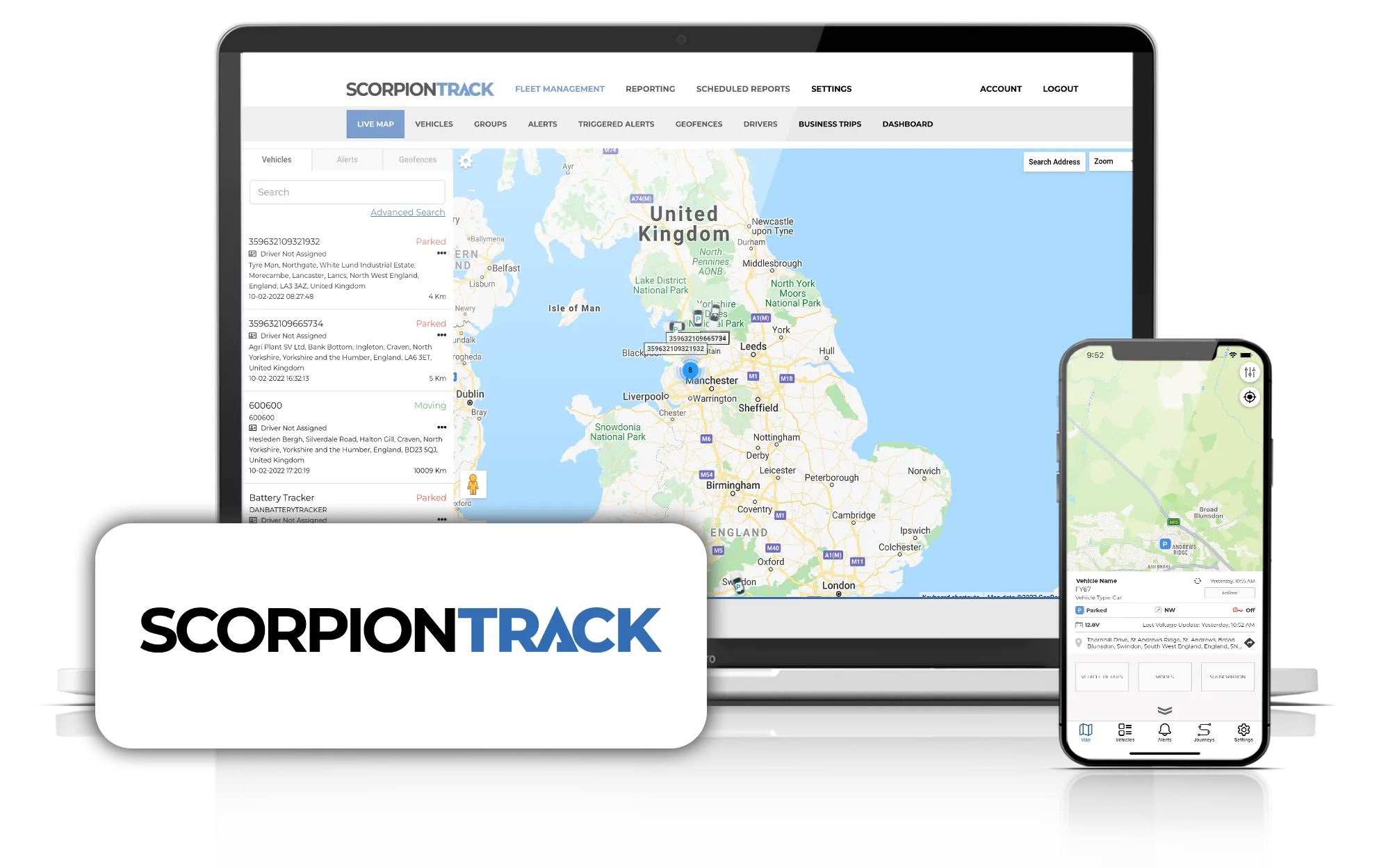
Scorpion’s alarms and immobilisers cover 24V HGVs, and ScorpionTrack’s fleet management platform tracks cars, vans, HGVs, plant and agricultural machinery on a live map with alerts and geofences. Vans in the same fleet can carry ScorpionTrack’s Thatcham car and van trackers with 24/7 monitoring.
HGV cargo theft: matching the fix to the threat
| Threat | What reduces it |
|---|---|
| Curtain slashing at services or lay-bys | Secure parking, hard-sided trailers for high-value loads |
| Trailer hook-up | Kingpin lock, trailer tracking, secure parking |
| Tractor unit stolen | Independent immobiliser, key control, tracking |
| Fictitious pick-up | Collection checks and verified carrier details |
| Load diverted mid-route | Telematics alerts and route monitoring |
Finding a load that has been hidden
Stolen loads are often moved into warehouses or containers, where satellite and mobile signals drop out. The Scorpion VHF+ Recovery Network adds a VHF beacon, usable with any tracker, for that final search. Hauliers running into Europe can read about VHF stolen vehicle recovery in Europe.
Talk to us about protecting trailers and loads
Tell us about your fleet, your trailers and the loads you carry, and we’ll suggest the right mix of vehicle security and telematics.
- Speak to us about HGV and cargo security
- Fleet management with AutoM8
Frequently Asked Questions
What is curtain slashing?
Curtain slashing is when thieves cut the side curtain of a curtain-sided trailer to see or reach the load. It usually happens while the truck is parked overnight, and police intelligence names it as one of the two principal threats to UK freight.
How do I stop my trailer being stolen?
Park in secure, fenced and lit sites where possible, fit a kingpin lock when the trailer is dropped, and add tracking so you’re alerted if it moves. Limit who knows what the trailer is carrying.
Where is HGV cargo theft most common?
Most cargo theft happens while trucks are parked overnight at services, lay-bys and industrial estates. NaVCIS lists several M1 services as repeat locations, and a shortage of secure lorry parking pushes drivers into riskier spots.
Does telematics help prevent cargo theft?
It helps detect and respond to it. Alerts for unexpected stops, door openings or route changes let the transport office act quickly, and live location supports recovery if a vehicle or trailer is taken.
Who investigates freight crime in the UK?
Freight crime is investigated by police forces, supported by the National Vehicle Crime Intelligence Service (NaVCIS), which gathers and shares intelligence on HGV, freight and cargo crime across England and Wales.
Speak to our team
Questions about vehicle security, tracking or fleet telematics? Our UK team will point you to the right product for your vehicle or fleet.
Related Products
View all products →

- HGV security
- freight crime
- fleet
- telematics

Mike B.
Software Engineer at Scorpion Automotive
Mike B. is a Software Engineer at Scorpion Automotive in Chorley. Vehicle security, immobilisers and keyless theft are the areas Mike covers.
Reviewed by James M., Technical Director at Scorpion Automotive


