Car Alarm Keeps Going Off? Common Causes of False Alarms
By Mike B. Reviewed byJames M.
If your car alarm keeps going off, it’s usually reacting to something real rather than failing at random. The most common causes are air moving inside the cabin, a worn bonnet or door switch, and a weak vehicle battery. Work through those first. If the alarm still triggers, have an installer read its memory.
Quick checks:
- Windows and sunroof: fully closed before arming?
- Inside the car: anything that moves, such as a hanging air freshener or a pet?
- Bonnet and doors: shut firmly, with switches clean and undamaged?
- Battery: is the car starting slowly or sitting unused for weeks?
- Recent work: any new accessory, repair or valet since the problem began?
Why does my car alarm keep going off for no reason?
There’s nearly always a reason. A car alarm triggers when one of its sensors reports a change, and most false alarms come from a sensor reporting a change that isn’t a thief.
The usual suspects, roughly in order of how often they’re worth checking:
- Interior sensors reacting to moving air. A window left open a crack, a sunroof vent or a fan still running.
- A perimeter switch that’s worn, dirty or out of adjustment. The bonnet switch is the classic culprit because it lives in the dirt and heat of the engine bay.
- Low voltage. A tired battery or a parasitic drain can upset the alarm’s electronics.
- Something new in the car. An accessory wired into the same circuits, or a part disturbed during a repair.
- Sensitivity set too high, so a passing lorry or a gust of wind is enough.
If the alarm records which zone triggered, that’s the quickest way to narrow it down. Many systems log it, and an installer can read it.
Could the interior sensor be causing it?
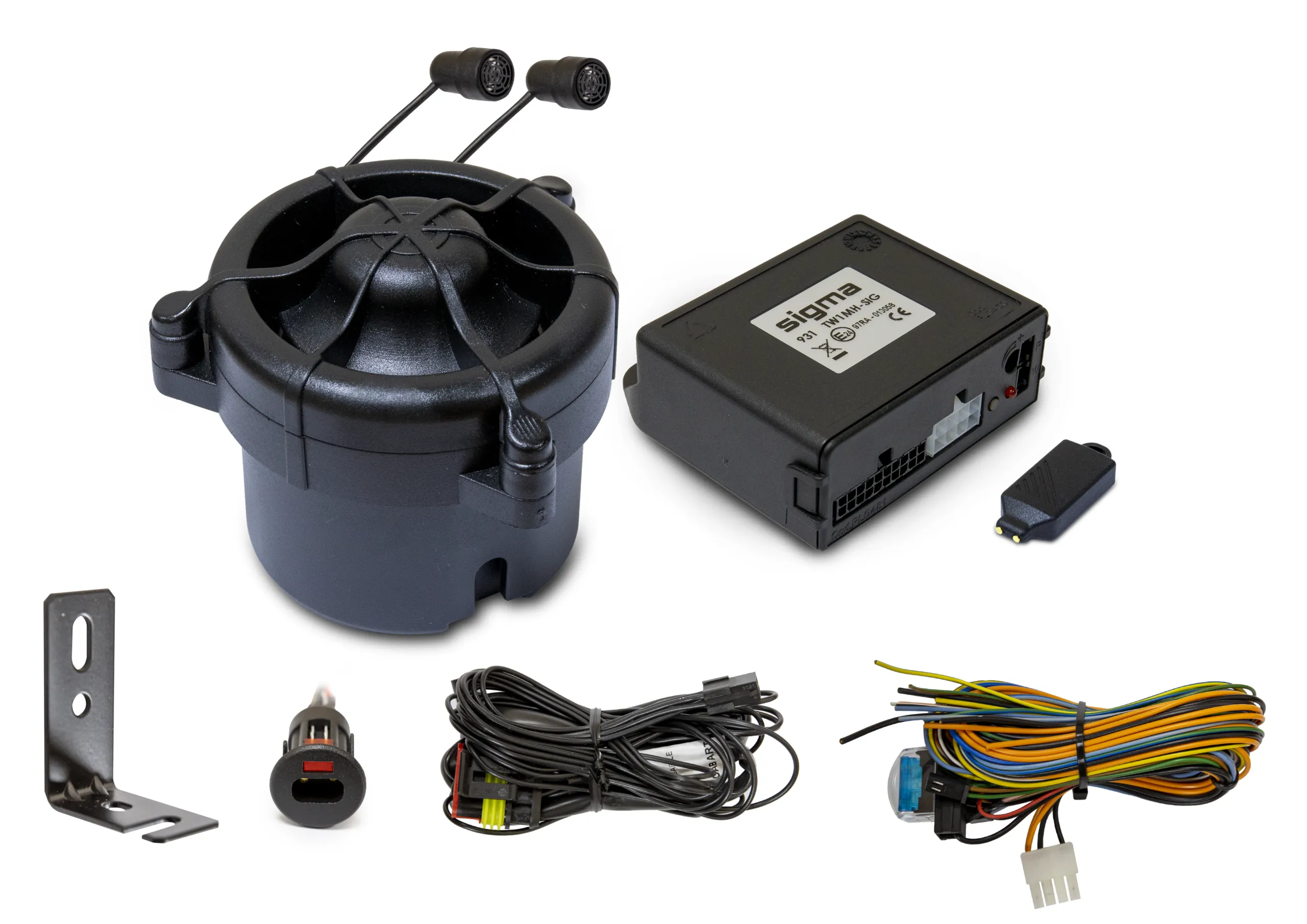
Very often, yes. Ultrasonic sensors read the air inside the cabin and react when the echo pattern changes. Anything that moves that air can look like an intruder.
Check for:
- a window or sunroof that isn’t fully shut
- the heater fan or air vents still blowing after you lock up
- loose items that sway: air fresheners, lanyards, balloons, bags hanging from a headrest
- a dog, or even a large insect, left inside
- sensors knocked or moved during cleaning
A quick test is to arm the alarm with interior protection switched off, if your system allows it. If the false alarms stop, the cause is inside the cabin. Our guide to ultrasonic car alarm sensors explains how they work and where they should be mounted.
Which cause matches your symptom?
Use the symptom to pick the first check. This is a diagnostic order, not a promise of the cause on your car.
| What you notice | Likely cause | First check |
|---|---|---|
| Alarm sounds soon after arming | Interior sensor reacting to moving air | Windows, sunroof, fan, hanging items |
| Triggers as the weather or temperature changes | Worn or dirty bonnet, door or boot switch | Zone memory, panel closure, switch condition |
| Worse in cold weather, slow starting | Weak battery or parasitic drain | Battery test, then a drain check |
| Began after a repair or accessory fit | Disturbed wiring or a shared circuit | Ask the fitter to retrace the work |
| Sounds when lorries pass | Sensitivity set too high | Have an installer adjust it |
Could a door, boot or bonnet switch be the problem?
Perimeter protection watches anything that opens. If a switch reports “open” when the panel is shut, the alarm triggers.
Bonnet switches suffer most. They sit in the engine bay, collect grime and can corrode or bend. A door or tailgate that doesn’t close firmly, or a worn catch, can also flicker between open and closed as the car cools at night or rocks in the wind.
Signs it’s a switch:
- the alarm triggers soon after arming, or when the weather changes
- the zone memory points to a door, boot or bonnet
- the courtesy light flickers or stays on
Clean, check and close each panel firmly. If a switch is damaged, it needs replacing by someone who knows the system.
Can a flat battery make a car alarm go off?
It can. Alarms monitor the vehicle’s electrical supply, and a battery that’s failing, or one being drained by a fault, can produce dips the alarm doesn’t like. Cars left unused for long spells are prone to this.
Clues include slow starting, warning lights on the dash and false alarms that get worse in cold weather. Have the battery tested. If it’s healthy, ask whether something is drawing power when the car is parked.
Is there a legal limit on how long a car alarm can sound?
In Great Britain, yes. Under the Road Vehicles (Construction and Use) Regulations 1986, an anti-theft siren, bell or gong must be fitted with a device that stops it sounding for a continuous period of more than five minutes, and that device must be kept in good working order (legislation.gov.uk).
Repeated false alarms also matter to neighbours. Noise from a vehicle in a street that’s prejudicial to health or a nuisance is a statutory nuisance under section 79 of the Environmental Protection Act 1990 (legislation.gov.uk), which councils can act on. Fixing the cause quickly is the considerate option as well as the sensible one.
What does the Scorpion S-Series range protect?
Most S-Series models combine perimeter protection (doors, boot, bonnet) with ultrasonic interior protection, so both causes above apply to them. The range, as listed on the product page:
| Model | Type | Thatcham status | Remotes |
|---|---|---|---|
| S4 | Remote alarm and CDL immobiliser | Non-Thatcham | Two additional radio keys |
| S12 | OEM remote upgrade alarm | Non-Thatcham | Original equipment keys |
| S30 | Category 1 alarm and immobiliser | Thatcham CAT 1 | Keypad programmer and override included |
| S32 | Category 2 to 1 plip upgrade | Thatcham 2 to 1 | Original equipment keys |
| S34 | Category 2 to 1 plip upgrade | Thatcham 2 to 1 | Additional radio keys |
| S37 | CAN-Bus upgrade alarm | Thatcham 2 to 1 | 4-button remote upgrade available |
Source: S-Series alarms product page, read 7 October 2026.
When should you call an installer?
Call a professional if:
- the false alarms continue after the quick checks
- the zone memory points to a component you can’t safely reach
- the alarm was fitted recently, or the problem began after other work
- the system is a Thatcham-rated alarm, where the installation should be kept to standard
An installer can read the alarm’s memory, test each switch, check sensor mounting and adjust sensitivity. Scorpion trains and supports approved installers on its products, with full fitting documentation and a UK technical desk. Owners of Scorpion and Sigma S-Series alarms can also contact the technical team directly.
Talk to us about a stubborn false alarm
Still getting false alarms from a Scorpion or Sigma system? Tell us the model, the vehicle and when it happens.
- Speak to us about alarm faults
- S-Series alarms for model information
Frequently Asked Questions
Why does my car alarm go off at night?
Temperature changes at night can affect worn door or bonnet switches, and a weak battery struggles more in the cold. Moving air through a gap in a window can also trigger interior sensors. Check the zone memory if your alarm has one.
How do I stop my car alarm going off for no reason?
Close every window and the sunroof, remove anything that hangs or moves, and shut each panel firmly. Then try arming without interior protection. If false alarms continue, have the battery tested and ask an installer to check the switches.
Can a car alarm go off because of the weather?
Indirectly. Strong wind can move a poorly closed door or rock the car, and cold can weaken a battery or affect a worn switch. Rain getting into a bonnet switch is another common cause.
How long can a car alarm legally sound in the UK?
Regulations for Great Britain require an anti-theft siren to have a device that stops it sounding continuously for more than five minutes. Repeated or prolonged alarm noise in a street can also be treated as a statutory nuisance.
Should I disconnect a car alarm that keeps going off?
Disconnecting it leaves the car unprotected and may break an insurance condition if the alarm is a required Thatcham system. Find the cause instead, and get an installer to repair or adjust it.
Speak to our team
Questions about vehicle security, tracking or fleet telematics? Our UK team will point you to the right product for your vehicle or fleet.
Related Products
View all products →

- car alarms
- false alarms
- troubleshooting
- S-Series

Mike B.
Software Engineer at Scorpion Automotive
Mike B. is a Software Engineer at Scorpion Automotive in Chorley. Vehicle security, immobilisers and keyless theft are the areas Mike covers.
Reviewed by James M., Technical Director at Scorpion Automotive