Fleet Security Tender Checklist: What to Ask Suppliers
By Ben S. Reviewed byJames M.
A fleet security tender asks suppliers to quote against your fleet’s real theft risks, vehicles and operating pattern, using the same questions for every bidder. Set out the problem first, specify outcomes rather than brands, and ask for evidence on approvals, installation, monitoring and support before you compare prices.
The checklist in brief:
- Define the risk: vehicle theft, theft from vehicles, or both.
- List the fleet: makes, models, ages and how they’re used.
- Specify outcomes: locking, immobilisation, tracking and monitoring.
- Ask for evidence: approvals, references and installation standards.
- Score the whole life: support, data, warranty and exit.
What should a fleet security tender cover?
A good tender reads like a brief, not a shopping list. Suppliers can only propose the right mix if they understand what you’re protecting and why.
Start with your own data. How many vehicles were stolen or broken into in the last few years? Which models, at which sites, at what time of day? Was it the vehicle, the tools or the parcels that went? That evidence shapes the specification and gives bidders something concrete to answer.
Then describe how the fleet works. Multi-drop delivery vans that stop every few minutes need different protection from plant that stands on site for weeks.
Which security measures should you specify?
Specify what each layer must achieve, and let suppliers show how they meet it.
| Risk | Outcome to specify |
|---|---|
| Theft from the load area during deliveries | Doors that lock automatically, with fast authorised access |
| Keyless or diagnostic-port theft | Immobilisation that works independently of the vehicle’s own systems |
| Losing the whole vehicle | Tracking with 24/7 monitoring and a recovery process |
| Driver safety and duty of care | Driver behaviour data and speed management where relevant |
| Insurer conditions | Products and installation that meet the insurer’s stated requirement |
Our guide to delivery van theft shows how auto-locking and touch keys answer the follow-on theft risk in practice.
What evidence should suppliers provide?
Ask every bidder for the same evidence so responses compare fairly:
- Approvals: which products carry which Thatcham category or insurer approval, with certificates.
- Manufacturing: who designs and makes the hardware, and where.
- Installation: who fits it, how fitters are trained, and how quality is checked.
- Monitoring: who watches for alerts, when, and what happens next.
- References: fleets of a similar size and type.
- Data: where vehicle data is held, who can see it and how you can export it.
Check certificates against the exact product proposed. Approvals apply to specific products and configurations.
How should you handle installation and roll-out?
A strong product badly fitted is a weak product. Ask how the supplier will fit across your sites without taking vehicles off the road for long.
Points to cover:
- Scheduling: fitting at your depots, at times that suit your operation.
- Vehicle variety: experience with each make and model on your list.
- Records: a fitting record per vehicle, with serial numbers and test results.
- Driver briefing: how drivers learn to use touch keys, PIN codes and alerts.
Ask for a pilot on a handful of vehicles before the full roll-out.
What about public sector fleet tenders?
Public bodies follow procurement law. In England, Wales and Northern Ireland the Procurement Act 2023 governs covered procurements, and the government’s Transforming Public Procurement guidance states that it came into force on 24 February 2025.
If you buy for a public body, your procurement team will set the procedure, notices and scoring rules. The security questions in this checklist still apply inside that framework.
How should you score a fleet security tender?
Price per vehicle is easy to compare and easy to over-weight. Score the whole life instead:
- Effectiveness against the risks you described.
- Evidence of approvals and performance.
- Installation quality and roll-out plan.
- Support, monitoring and response.
- Total cost over the contract, including subscriptions and removals.
- Exit: what happens to hardware and data at the end.
Link the tender to your wider policies too. Our duty of care and speed control page covers the driver safety side.
What FleetLock answers in a tender
Scorpion has designed and manufactured vehicle security in the UK since 1973. For vans, FleetLock was developed with delivery service companies and comes in Lite, Plus and Pro levels. It combines multipoint auto-locking with anti-scan touch keys and keypad immobilisation that works independently of the vehicle’s computer. FleetLock Pro adds AutoM8 telematics with remote immobilisation and 24/7/365 theft monitoring.
Recovery questions for the specification
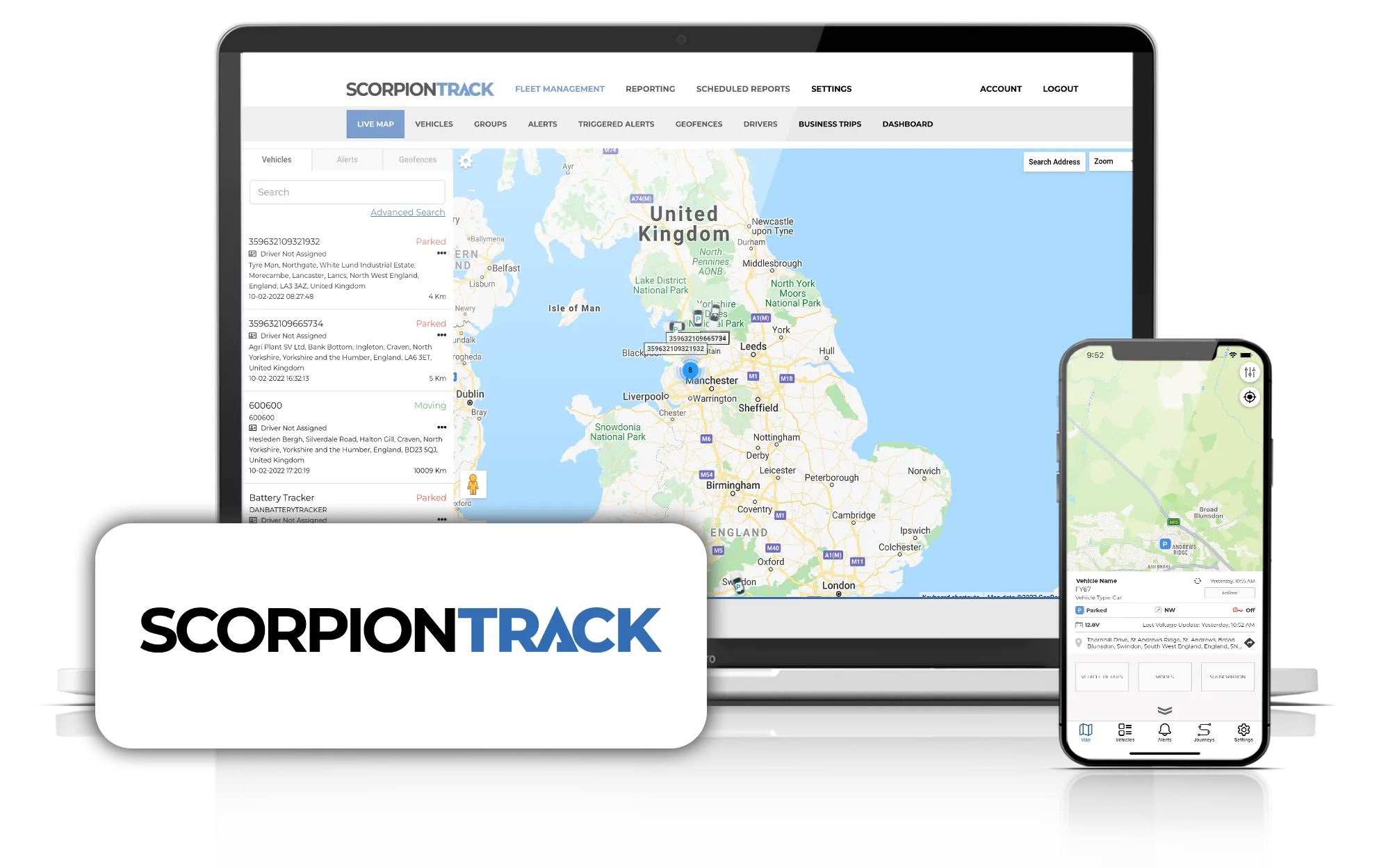
A tender can score recovery as well as prevention. One question worth adding is whether a supplier can add a radio layer for vehicles hidden inside buildings, which is what the Scorpion VHF+ Recovery Network is being built to do for any tracker. VHF recovery for insurers and fleets covers judging the evidence, and VHF vs GPS tracker compares the technologies.
Talk to us about your fleet security tender
Writing a fleet security specification or tender?
- Speak to us about your fleet and its risks
- FleetLock for van locking, immobilisation and tracking
Frequently Asked Questions
What should a fleet security tender include?
It should describe your theft risks and fleet, specify the outcomes you need from locking, immobilisation, tracking and monitoring, and ask every supplier for the same evidence on approvals, installation, support and data handling.
Should a fleet security tender name specific products?
Usually not. Specify outcomes, such as doors that lock automatically or immobilisation independent of the vehicle’s systems, and let suppliers propose products. Name a product only where an insurer requires it.
How do I compare fleet security suppliers fairly?
Ask every bidder the same questions, request certificates for the exact products proposed, run a short pilot and score the whole life: effectiveness, evidence, installation, support, total cost and exit terms.
Does the Procurement Act 2023 apply to fleet security purchases?
It applies to covered procurements by public bodies in England, Wales and Northern Ireland. Government guidance states it came into force on 24 February 2025. Private fleets aren’t bound by it but can use the same discipline.
Can Scorpion respond to fleet security tenders?
Speak to us with your requirement. Scorpion manufactures fleet security including FleetLock, with AutoM8 telematics and 24/7/365 monitoring, and can discuss how they meet your specification.
Speak to our team
Dealers, installers and OEM partners get trade pricing, product training and a named account manager. Tell us what you need.
Related Products
View all products →
- fleet
- procurement
- tenders
- FleetLock
- tracking

Ben S.
Software Engineer at Scorpion Automotive
Ben S. is a Software Engineer at Scorpion Automotive in Chorley, covering fleet management, telematics and AutoM8.
Reviewed by James M., Technical Director at Scorpion Automotive


