Fleet Speed Control Policy for UK Fleets: How to Write One
By Ben S. Reviewed byJames M.
A fleet speed control policy states what speed is acceptable, how you will monitor it and what happens when it is breached. Write it in plain language, pair rules with tools, and explain the reasons to drivers before you switch anything on.
What a good policy covers:
- The rule: posted limits are the ceiling, and any company limit sits below them.
- The tools: how speed is monitored, and whether a limiter is fitted.
- The response: coaching first, then clear and consistent consequences.
- The exceptions: emergencies and special vehicles, written down.
- The review: who checks the data and how often.
Why does a fleet need a written speed policy?
Because speed is a risk the employer controls. A written policy shows drivers what is expected and shows managers what to do about it. It also gives you a fair basis for conversations, since every driver is measured against the same rule.
Without one, speed enforcement becomes personal. A manager chases the drivers they notice, drivers argue that others do the same, and nothing changes. A policy replaces that with a shared standard. It also sits within your wider employer responsibilities, which we cover in our duty of care and fleet speed control page.
What should a fleet speed policy say?
Keep it to one or two pages. A reader should find the answer to each of these in under a minute.
- Scope: which vehicles and which drivers, including occasional and agency drivers.
- The standard: drive within the posted limit at all times, and state any lower company limit, such as a site or yard limit.
- Monitoring: that speed is recorded, who sees the data and how long it is kept.
- Coaching: how breaches are raised, usually a conversation within days.
- Escalation: what happens after repeated breaches, in steps that apply to everyone.
- Exceptions: how emergency and special-purpose vehicles are treated.
- Review: when the policy and its results are reviewed.
Avoid vague wording such as “drive sensibly”. A driver cannot tell whether they have broken it, and a manager cannot show that they have.
Which tools should the policy use?
Policies work best when the rule and the tool match. There are three broad levels, and many fleets combine them.
| Approach | What it does | Best for |
|---|---|---|
| Monitoring and reports | Records speed against the limit and shows breaches after the fact | Most vans and cars, with coaching |
| Alerts | Notifies the manager or driver as a breach happens | Fleets that want faster intervention |
| Limiting | Caps the speed the vehicle can reach | Vehicles where a hard cap is justified by risk or contract |
A limiter is a decision for the vehicle, not a substitute for the policy. Scorpion Group’s speed limiter brand, Autokontrol, covers the technical detail at autokontrol.com, and our speed limiters and TrackSpeed pages explain how limiting and tracking can work together. We keep the limiter depth there so this guide stays on the policy itself.
How do remote limits and zonal speed fit in?
Two options are worth naming in a modern policy because they change what “the limit” can mean.
- Remote limits: the company limit for a vehicle or group can be changed without bringing the vehicle to a depot, which suits fleets whose rules change by contract or site.
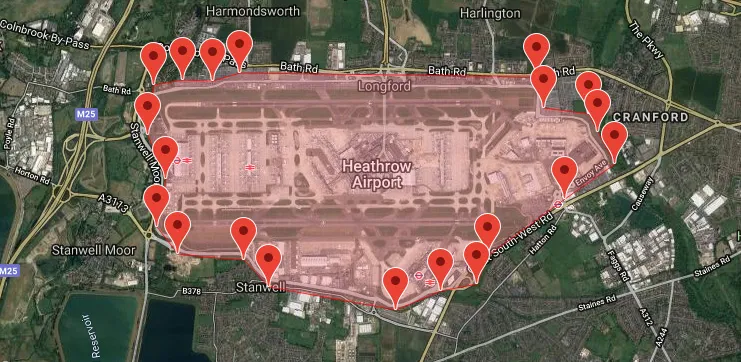
- Zonal speed: a lower limit applies inside a defined area such as a yard, depot or customer site, and returns to normal outside it.
If you use either, say so in the policy, say who can change a limit and keep a record of changes. Drivers will accept a lower limit in a yard far more readily when the reason is written down.
How do you roll the policy out fairly?
Fairness decides whether drivers accept the policy. A few steps make a real difference.
- Brief drivers first, in person, and explain the safety reason rather than the enforcement.
- Start with a coaching period where data is shared but not disciplined.
- Check the data is fair. Scoring that ignores vehicle weight or flags tiny breaches will undermine trust. Our guide to fair driver behaviour scoring explains what to look for.
- Apply the same rules to everyone, including managers who drive.
- Review results monthly and share improvement as well as problems.
Scorpion’s fleet management range covers tracking and driver reporting across vans and commercial vehicles.
Remote speed control in AutoM8
Scorpion’s fleet platform, AutoM8, says its speed control lets you set and push limits to vehicles over the air, per vehicle or per group. Zonal speed lowers the limit inside yards or sites, and a log records each change. It uses TrackSpeed, and limiter depth stays with Autokontrol.
See the speed control feature page and the speed control guide. Existing users can log in to AutoM8.
The legal baseline sits in which vehicles must have a speed limiter, so a policy can start from what is already required.
Talk to us about a speed policy for your fleet
Tell us how your fleet operates and where speed is a concern, and we’ll talk through the options.
- Speak to us about speed control for your fleet
- Speed limiters for the product range
Frequently Asked Questions
What should a fleet speed policy include?
The rule, the monitoring method, how breaches are raised, the escalation steps, exceptions for special vehicles and a review schedule. Keep it short and specific so a driver can tell whether they have followed it.
Do I need a speed limiter to enforce a speed policy?
No. Many fleets use monitoring and coaching. A limiter suits vehicles where a hard cap is justified by risk or contract, and it works best alongside a written policy rather than instead of one.
How do I introduce a speed policy to drivers?
Brief them in person, explain the safety reasons, start with a coaching period and make sure the data is fair. Apply the same rules to everyone and share improvements as well as breaches.
Can the company speed limit be lower than the legal limit?
Yes. Many employers set a lower limit for yards, depots, sites or particular vehicles. Write it into the policy, say how it is applied and keep a record of any changes.
Where can I find out more about speed limiters?
Autokontrol covers speed limiter technology at autokontrol.com, and our speed limiters page explains the Scorpion range.
Speak to our team
Questions about vehicle security, tracking or fleet telematics? Our UK team will point you to the right product for your vehicle or fleet.
Related Products
View all products →
- speed control
- fleet management
- speed policy
- driver safety

Ben S.
Software Engineer at Scorpion Automotive
Ben S. is a Software Engineer at Scorpion Automotive in Chorley, covering fleet management, telematics and AutoM8.
Reviewed by James M., Technical Director at Scorpion Automotive


