EV Fleet Security and Duty of Care
By Ben S. Reviewed byJames M.
EV fleet security means protecting electric vehicles from theft and protecting the people who drive them, because employers owe a duty of care to staff who drive for work. In practice that’s monitored tracking, an immobiliser keyless thieves can’t beat, and procedures for drivers. The same system that recovers a stolen EV also tells you where a lone driver is.
Key points:
- Two duties: protect the asset and protect the driver.
- Law applies on the road: health and safety duties cover driving for work.
- Keyless EVs need a second check: a PIN or driver tag stops key-only theft.
- Tracking does double duty: recovery for the vehicle, visibility for the driver.
- Power draw matters: low-draw kit protects the 12V battery on parked EVs.
What does EV fleet security involve?
Fleets now buy most of the UK’s new cars. In 2024, fleets accounted for a record 59.6% of new car registrations, while only one in ten private buyers went electric, according to the SMMT (SMMT). Fleets lead on electric too: in September 2024 they took 75.9% of new battery electric car registrations (SMMT).
Security for those vehicles has three layers:
- Prevention: stop the car or van being driven away.
- Detection: know straight away when something is wrong.
- Recovery: find the vehicle if it’s taken.
On top sits the people side, which is where duty of care comes in.
What is an employer’s duty of care to EV drivers?
The Health and Safety Executive is clear. Employers must manage health and safety risks to workers who drive as part of their work, and health and safety law applies on the road as it does on a fixed site (HSE).
HSE guidance adds several points that matter for EV fleets:
- Risk assessment should cover the journey, the driver and the vehicle.
- Grey fleet counts: the law applies to employees’ own vehicles used for work, including cash allowance cars.
- Lone workers need particular attention, including delivery drivers and couriers working away from a base.
- Workers must be consulted about health and safety.
None of that changes because the vehicle is electric. What changes is some of the risk detail, such as planning charging stops, and the security profile of keyless vehicles. Our page on duty of care and fleet speed control covers another part of the same duty.
How does security support duty of care?
Security and driver safety overlap more than most fleet policies admit.
| Fleet need | Security feature | Duty of care benefit |
|---|---|---|
| Stop theft by relay or cloned key | Immobiliser needing a PIN or driver tag | Fewer confrontations around a vehicle |
| Know where vehicles are | Live tracking and geofences | Locate a lone driver who’s overdue |
| Spot unauthorised use | Driver identification tags | Know who was driving, when |
| Recover a stolen vehicle | 24/7 monitored tracking | Faster return to service |
| Protect the 12V battery | Low standby draw | Fewer flat-battery call-outs for drivers |
Theft costs make the business case. The ABI reported the average claim for theft of and from a vehicle reached £11.2k in the last quarter of 2024 (ABI).
What should an EV fleet security policy include?
Keep it short enough that drivers actually follow it.
- Key handling. Store keyless fobs away from doors and windows; use sleep mode or a signal-blocking pouch where the fob supports it.
- Second factor. Fit an immobiliser that needs a PIN or tag, and make PINs personal.
- Charging stops. Plan well-lit, staffed locations where possible, especially for lone drivers at night.
- Tracking. Fit monitored tracking with alerts routed to someone on duty.
- Incident steps. What a driver does if approached, if the vehicle is taken, or if it won’t start.
- Review. Revisit the risk assessment when routes, vehicles or staff change.
Where does Scorpion fit for EV fleets?
ScorpionTrack S5 and S7 trackers are Thatcham approved and use battery technology that keeps power draw minimal, reducing any impact on range. The Scorpion S5EV+ pairs ScorpionTrack tracking with the X-Series CAN immobiliser, which disarms automatically when the driver’s S5 ADR tag is present and asks for a PIN when it isn’t. See electric vehicle tracking.
AutoM8 shows every vehicle on a live map with alerts, drivers and geofences, for fleets of five vehicles or five thousand. Our fleet management page covers the platform. For electric vans carrying stock, FleetLock adds multipoint locking and independent keypad immobilisation.
If your insurer names a tracker category for the fleet, our post on electric car trackers and insurance explains how to read it.
Recovery evidence for a duty-of-care file
A fleet’s record of what it did after a theft matters as much as what it fitted. For a mixed EV fleet, the Scorpion VHF+ Recovery Network offers a beacon that isn’t tied to one tracker brand, so one recovery step can cover every vehicle. Insurers and fleet buyers can start with how to judge VHF recovery on evidence.
Talk to us about duty of care across your EV fleet
Running or planning an electric fleet? Tell us the vehicle mix and how they’re used.
- Speak to us about EV fleet security
- Fleet management with AutoM8
Frequently Asked Questions
What is EV fleet security?
It’s the set of measures that protect electric fleet vehicles from theft and misuse: immobilisers that resist keyless theft, monitored tracking, driver identification and clear procedures. Done well, the same measures also support the employer’s duty of care to drivers.
Do employers have a duty of care to drivers of electric vehicles?
Yes. HSE guidance says employers must manage the health and safety risks to workers who drive for work, whatever the vehicle. That includes grey fleet vehicles and lone workers. The duty is the same for electric and combustion vehicles.
Are electric fleet vehicles a theft risk?
Like other modern cars, many EVs are keyless, so they face relay and key cloning attacks. Fleet vehicles are often parked at home overnight or at public chargers, which adds exposure. An immobiliser with a PIN or tag closes the key-only gap.
Does tracking help with duty of care?
It can support it. Live tracking shows where vehicles and lone drivers are, geofences flag unexpected movements, and driver tags show who was driving. Tracking doesn’t replace a risk assessment, but it gives you information to act on.
Will security kit drain an EV fleet vehicle’s battery?
All accessories draw some current from the 12V battery while the vehicle sleeps. Choose products with low standby draw and have them fitted by trained installers. ScorpionTrack’s EV trackers keep power draw minimal to reduce any impact on range.
Speak to our team
Questions about vehicle security, tracking or fleet telematics? Our UK team will point you to the right product for your vehicle or fleet.
Related Products
View all products →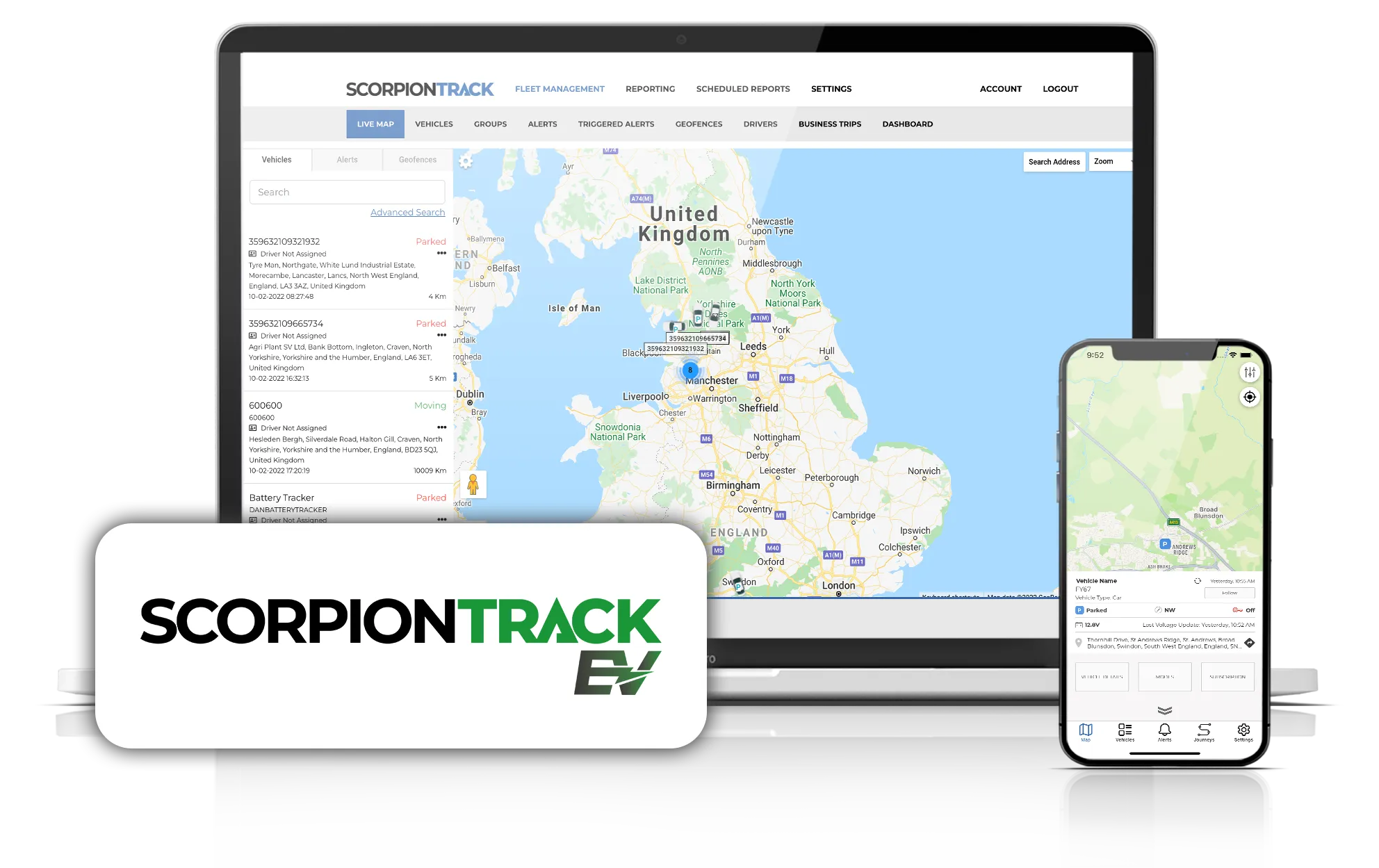

- electric vehicles
- fleet
- duty of care
- ScorpionTrack
- VHF+

Ben S.
Software Engineer at Scorpion Automotive
Ben S. is a Software Engineer at Scorpion Automotive in Chorley, covering fleet management, telematics and AutoM8.
Reviewed by James M., Technical Director at Scorpion Automotive


