Catalytic Converter Theft: Trends and Prevention
By Morgan P. Reviewed byJames M.

Catalytic converter theft is the cutting of the exhaust’s catalytic converter from underneath a parked car so the precious metals inside can be sold. It takes minutes, it leaves the car loud and unroadworthy, and the best prevention combines careful parking, marking and physical protection.
Key facts:
- Precious metals: converters contain metals that an MP told the Commons are “three times the price of gold” in some cases.
- Speed: a converter can be removed in minutes, “or even as quickly as 30 seconds in some cases”.
- No cash: since the Scrap Metal Dealers Act 2013, dealers may only pay by cheque or electronic transfer.
- Police action: a national week of action in April 2021 recovered 1,037 stolen converters and made 56 arrests.
- Prevention is about making your car slower and riskier to work on.
Why are catalytic converters stolen?
A catalytic converter cleans exhaust gases using a coating of precious metals. That coating is what thieves are after.
In a June 2021 Commons debate, Elliot Colburn MP said the metals that make a converter work “are very valuable, some are three times the price of gold” (Hansard). In the Lords that October, the Home Office minister said converters “which contain precious and rare metals, are being targeted at this time” (Hansard).
Three things make the crime attractive:
- Value: a small, light part carries metal worth far more than its size suggests.
- Access: the converter sits under the car, often reachable without lifting it far.
- Anonymity: once cut off, a converter has no number plate and no VIN.
How quickly can a catalytic converter be stolen?
Very quickly. The same debate heard that a thief “can take a catalytic converter from a car in a matter of minutes, or even as quickly as 30 seconds in some cases, often using a pipe cutter or similar tool”.
That speed shapes the whole problem. An alarm that sounds after the converter is gone doesn’t save it. Prevention has to slow the thief down or put them off before they start.
What did the law and the police do about it?
The main legal change came before the theft wave. Section 12 of the Scrap Metal Dealers Act 2013 says a dealer “must not pay for scrap metal except” by a non-transferable cheque or an electronic transfer (legislation.gov.uk). The Home Office’s review of the Act confirmed it “makes it an offence for dealers to purchase scrap metal for cash” (Home Office).
Police operations followed when thefts rose:
- London: Colburn told the Commons that catalytic converter theft in London rose by nearly 50% in 2020, and described the Metropolitan Police and British Transport Police’s Operation Basswood raids.
- National week of action, April 2021: led by British Transport Police, it saw “1,610 vehicles forensically marked, 1,037 stolen catalytic converters recovered and 56 arrests made”.
- Design: in a February 2022 Commons exchange, the policing minister called on manufacturers to “design out the theft of converters” (Hansard).
Where the converters go matters too. Many end up in the same parts and metals trade that feeds chop shop car theft.
How do you prevent catalytic converter theft?
There’s no single fix. Use several small barriers so your car takes longer, and looks riskier, than the one next to it.
| Step | Why it helps |
|---|---|
| Park in a garage, or close to a wall or kerb | Harder to get underneath and work unseen |
| Park in busy, well-lit, overlooked spots | Thieves want privacy and time |
| Have the converter forensically marked | Marked parts are harder to sell; police used marking in the 2021 week of action |
| Fit a converter guard, cage or clamp | Adds minutes of noisy work with tools |
| Use CCTV or a doorbell camera covering the car | Evidence, and a visible deterrent |
| Ask your garage or dealer about your model | Some models are targeted more than others |
If you run a fleet, the same rules apply to depot parking. Vehicles parked nose-to-tail in a lit, fenced yard are far less attractive than ones spread along a dark road.
Can a car alarm stop catalytic converter theft?
An alarm is one layer, not a cure. It works best as a deterrent: a visible, armed alarm tells a thief the car is protected and that any disturbance may draw attention.
Be realistic about it, though. Converter thieves often work from underneath, quickly, and an alarm reacts to what its sensors detect. Ask any installer exactly what the alarm you’re considering monitors before you rely on it for this risk.
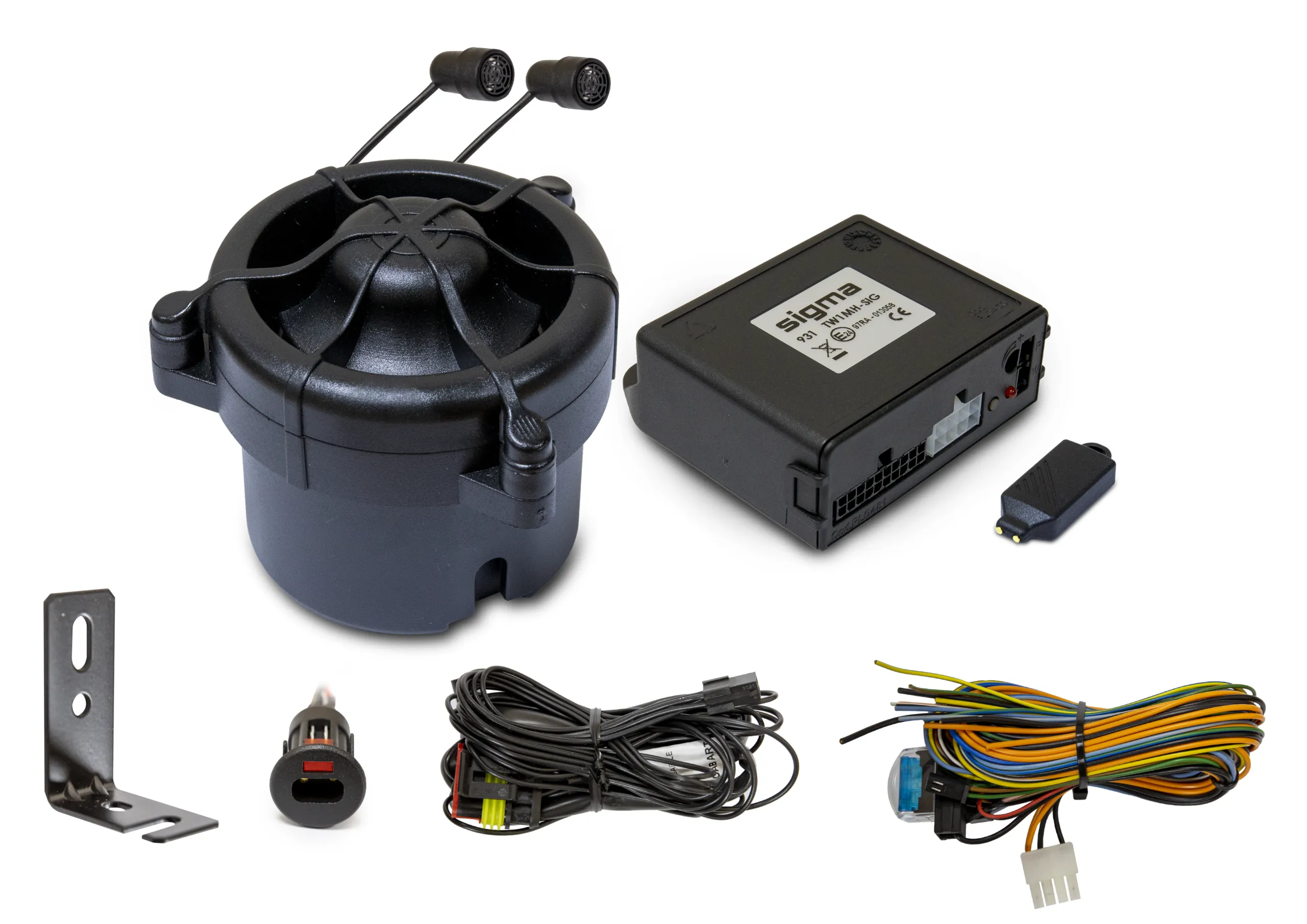
Scorpion’s S-Series alarms include Thatcham Category 1 and Category 2-1 models with perimeter and ultrasonic interior protection. They protect the car as a whole and suit drivers who want an insurer-recognised alarm. Our wider range of alarms and immobilisers covers CAN bus and analogue vehicles.
What should you do if your catalytic converter is stolen?
You’ll usually know straight away: the car sounds like a tractor when you start it.
- Don’t drive it far. Without the converter it will be loud, and may not be roadworthy.
- Report it to the police and get a crime reference number.
- Call your insurer. Converter theft is normally a claim under theft cover, but check your policy.
- Ask about marking and a guard when the replacement is fitted.
Talk to us about catalytic converter protection
Protecting a car, a van or a fleet that parks outdoors? Tell us the vehicles and where they’re kept.
- Speak to us about alarms and vehicle security
- S-Series alarms for Thatcham-recognised alarm protection
Frequently Asked Questions
Why are catalytic converters stolen?
Catalytic converters contain precious metals that are very valuable as scrap. An MP told the Commons in 2021 that some are three times the price of gold. The converter is small, reachable from under the car and has no identifying number once removed.
How long does it take to steal a catalytic converter?
Minutes, and sometimes as little as 30 seconds, according to evidence given in a 2021 Commons debate. Thieves often cut through the exhaust with a pipe cutter or a similar tool.
Can scrap dealers pay cash for catalytic converters?
No. Section 12 of the Scrap Metal Dealers Act 2013 says dealers in England and Wales must only pay for scrap metal by non-transferable cheque or electronic transfer, which makes buying scrap for cash an offence.
Does marking a catalytic converter help?
Yes. A marked converter is harder to sell and easier to trace back to the car. Police forensically marked 1,610 vehicles during a national week of action in April 2021 that also recovered 1,037 stolen converters.
Will my insurance cover catalytic converter theft?
Usually, if your policy includes theft cover, but terms and excesses vary. Check your policy, report the theft to the police for a crime reference number, and tell your insurer as soon as possible.
Speak to our team
Want tracking backed by a recovery team that works 24/7 with UK police? Speak to us about the right system for your vehicles.
Related Products
View all products →

- catalytic converters
- vehicle crime
- car alarms
- theft prevention

Morgan P.
Head of Tracking Support at Scorpion Automotive
As Head of Tracking Support at Scorpion Automotive in Chorley, Morgan P. writes about Scorpion VHF+, stolen vehicle tracking, theft data and international markets.
Reviewed by James M., Technical Director at Scorpion Automotive


